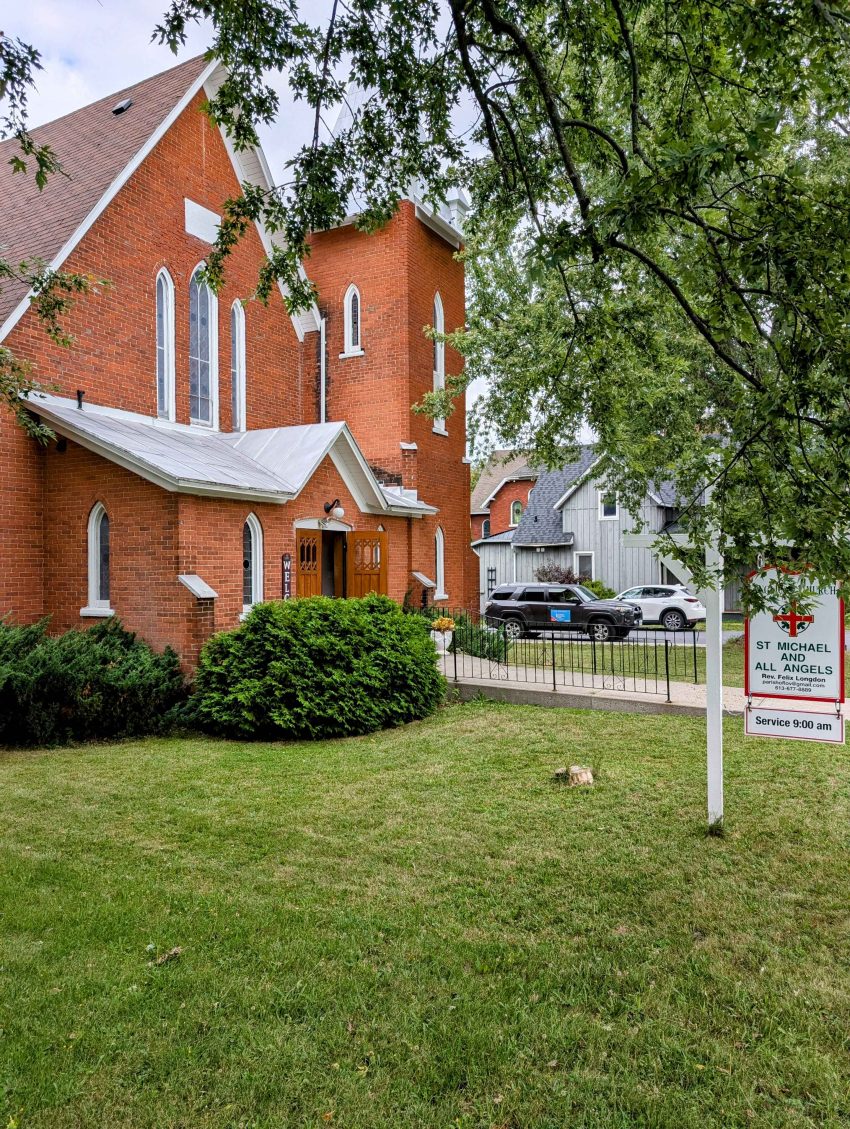
On my way to the Glengarry Pioneer Museum’s Fall Harvest Fair on a crisp morning, I stopped by St. Michael and All Angels Anglican Church in Maxville, Ontario, and attended their 9:00 am Sunday service. Built in 1860 as a Presbyterian church and later to serve as the spiritual home of a Baptist community, the church was purchased by Anglicans in 1960 and became a part of the Diocese of Ottawa. Today, this small faith community is one of five active places of worship that together form the Parish of Lower Ottawa Valley. The church’s fairly simple interior, with a beautiful wood ceiling, is impeccably maintained.
While St. Michael and All Angels is indeed a small community, it offers big hospitality. The moment I arrived, a volunteer who also served as a lector greeted me, shook my hand and provided an order of service. At the end of the service, as I was about to slip out the door, she invited me to stay for coffee. There were a dozen of us at the service, including Felix Longdon — a priest originally from Ghana, who proved to be an engaging homilist — as well as a pianist who doubled as the cantor.
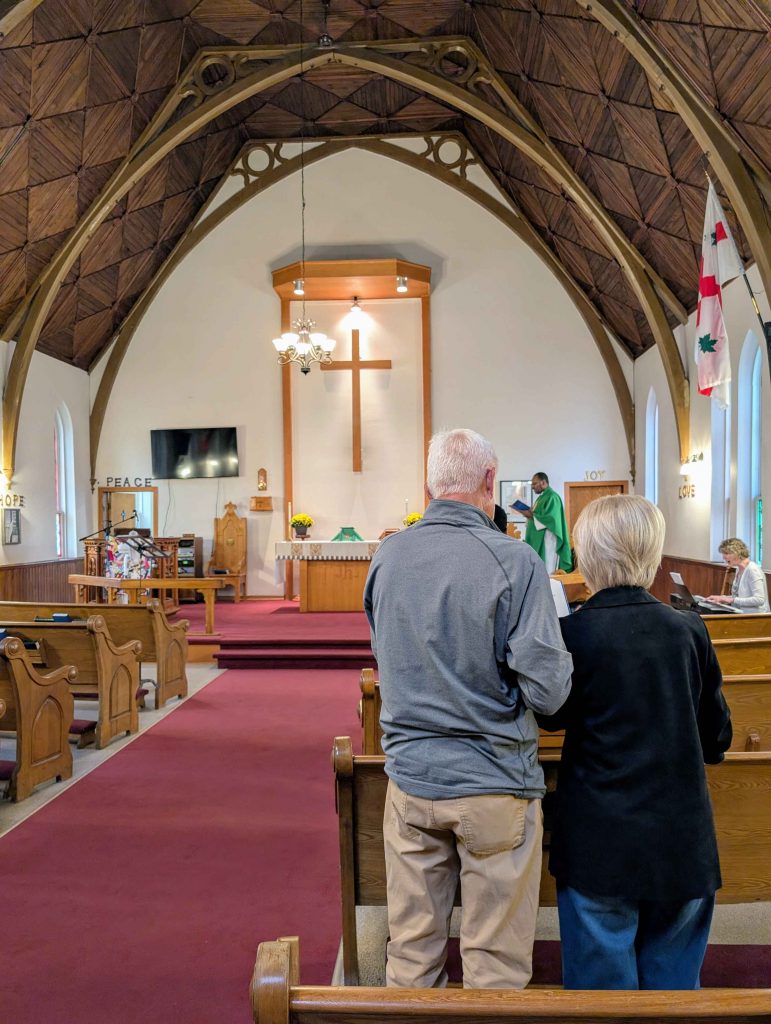
Fr. Felix was dealt some difficult readings this Sunday! In Luke 14:25, we hear about the steep cost of being a disciple of Christ with words that burn with their harsh insistence: “Whoever comes to me and does not hate father and mother, wife and children, brothers and sisters, yes, and even life itself, cannot be my disciple. Whoever does not carry the cross and follow me cannot be my disciple.” In his sermon, he spoke about a practice in his home country of Ghana where newly ordained priests carry a physical cross, binding them closely to Jesus. Felix also noted that the reading from Luke is among the hardest for us to fathom and can sometimes turn people away from Christianity. Yet he spoke about the spiritual merit of exercising self-denial and added that sometimes the price we pay for our beliefs, and for living a life guided by sacrifice and love, is the ridicule of secular society.
The offertory hymn complemented the Gospel reading perfectly. We sang “Jesus Calls Us! O’er the Tumult” and I was particularly struck by the imagery in these two verses:
Jesus calls us from the worship
of the vain world’s golden store,
from each idol that would keep us,
saying, “Christians, love me more.”
In our joys and in our sorrows,
days of toil and hours of ease,
still he calls, in cares and pleasures,
‘Christian, love me more than these.’
The prayers of the faithful included the names of many in the local Maxville community — showing that even a small congregation can retain deep connections to the people around them.
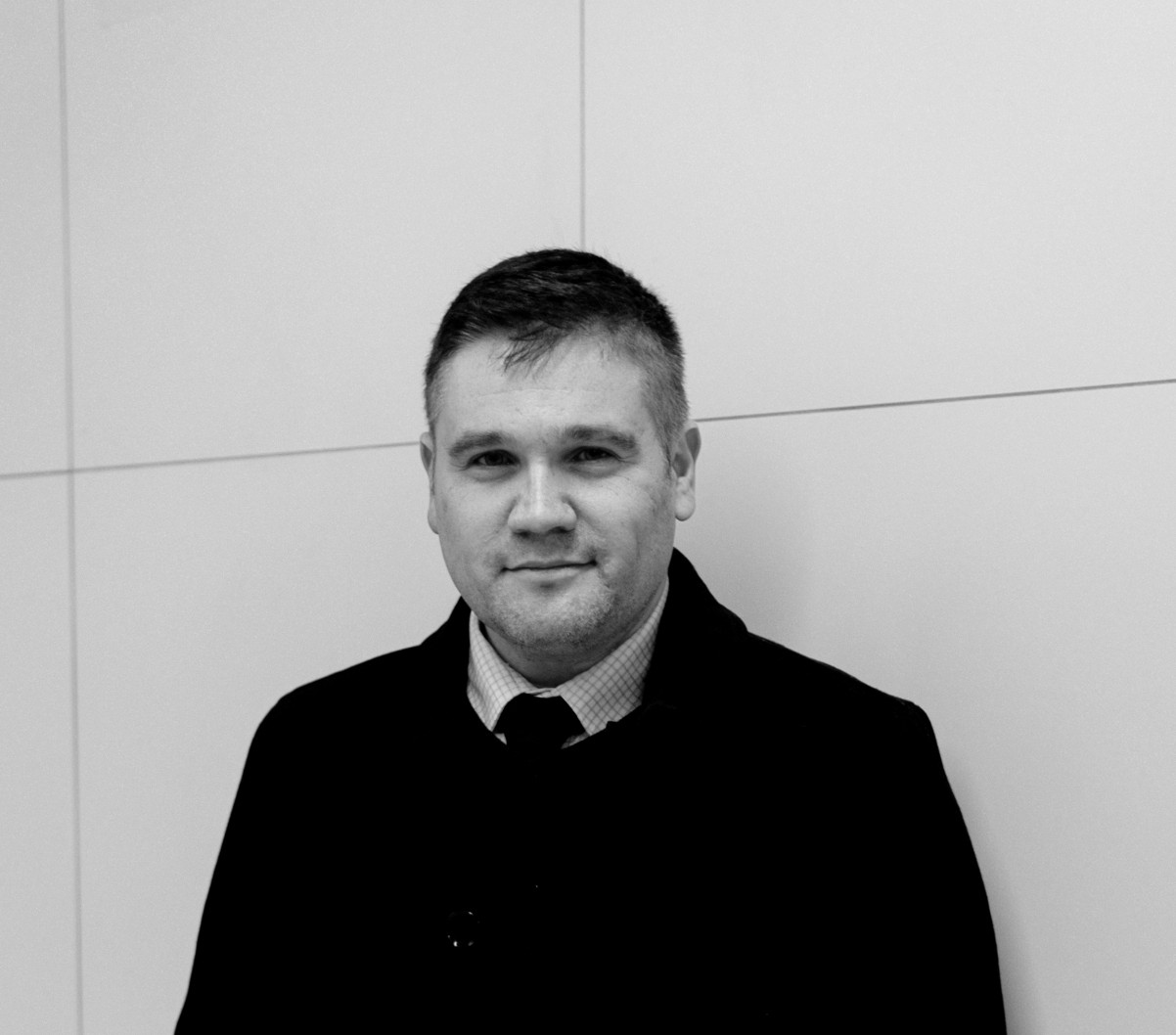
Born in Montreal, Christopher Adam has called Ottawa home for the past twenty years. He received his MA from Carleton University, with a thesis focusing on twentieth century European church history, and a PhD in History from the University of Ottawa. Over the years, he has published widely and works in the faith-based charitable sector in Ottawa.