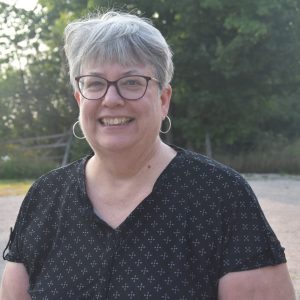
Reverend Lynne Gardiner ministers at Bethel United Church in Perth, where the current church has stood since 1895. Rev. Gardiner began her ministry in Perth in 2019, having completed her Master of Divinity from Queen’s University in 2015, followed by ordination in 2017. In the piece below, Rev. Gardiner reflects on the unique gifts and challenges of ministering in a rural community.
I first recognized my call to ministry when I was asked to serve as Student Supply at Millen’s Bay Union Church in upstate New York, just over the bridge spanning the St. Lawrence River. I live on the Canadian side of the river, and the drive to Millen’s Bay was just over a half hour. This little white church was only open in the summer, had no plumbing or electricity, and the organ was an old pump organ that was capably played by a neighbour. I had very little ministry experience at this point, and virtually none in a rural setting. At first, I was daunted by driving a half hour, navigating a border crossing, finding a washroom at the nearby gas station before worship, and then leading an ecumenical worship service with a congregation that changed every week and seemed to know far more about what they were doing than I did.
My first few services with them were stressful. I doubted my call to ministry more than I ever had before. Finally one Sunday, one of the ‘regulars’ stopped me after worship, saying, “You’re really doing a good job, Lynne. Can I ask you about one of your points?” I realized in that moment that green as I was, people were listening to me, cared about what I was saying, and valued what I was doing. The summer went on—some Sundays I preached to only a handful of people, some Sundays the church was full. But every Sunday I left with a ton of affirmation, a ton of care and support, and gentle direction from the congregation and the Holy Spirit that where I was going, and who I was, was valuable and honored in their and God’s eyes.
That was the summer I recognized that the ministry I was called to was highly community-driven and relational. I believed that God was calling me to places where I know everyone’s name, and they know mine. Places where connection to each other is nurtured, so that all are energized to go into God’s world in love, justice, and peace. Places that are humble, but marked by joy and community; where sharing a meal is considered as sacred as worship, and gathering happens simply because everyone wants to be with each other, not because there was something ‘special’ going on.
Actually, I think that this gathering is the ‘special’ that’s going on.
Since that summer as a student, I have continued to serve in rural and small pastoral charges. Each has their own unique characteristics, but all share the sense that they are family and community, that gathering together is sacred, and that service to the world comes out of this place of community. I love this so much, and week after week I feel honored and upheld in the ministry I’m called to. Except….
Except when I do wider church activities.
There’s still this embedded belief in the United Church that ‘bigger is better’ and that programs are what are funded and supported. I am often asked if I am considering applying for bigger churches in urban centres, as if my ministry is only a stepping stone to something more prestigious. Colleagues casually ask what programs and activities I’m initiating, rather than how much disciple-making and community building I’m involved in. Programs are uplifted over relationships. And service is expected to happen in epic ways rather than little pond ripples that slowly affect the shorelines of our lives.
And yet, the church that I serve is thriving. We are holding our own in terms of managing a budget. Our building is modest, but it’s right for the 40 or so I have in worship every Sunday. We receive between eight and 10 new members a year, which is more than are at the funerals I do. I look out in the congregation every Sunday and know who’s there and who isn’t, and why they’re there or not.
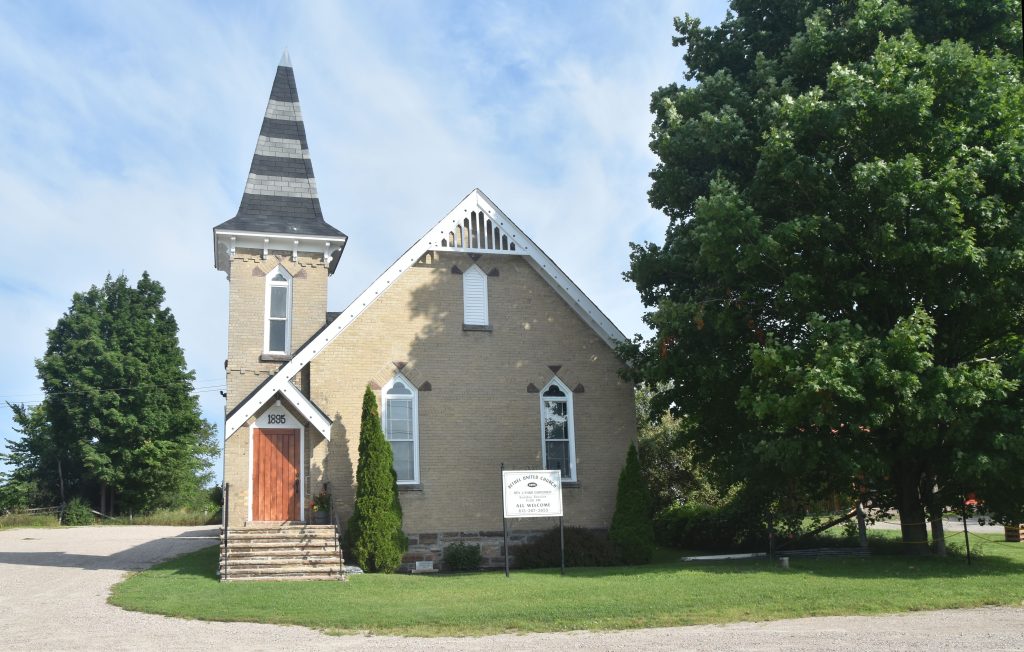
When I work at the church, I know that I can raid the fridge if I’ve forgotten my lunch because someone has left something there as a treat. Or that stacked on my desk chair are articles and books that people thought I might like. I also know who’s putting the coffee on for the group in the afternoon, or who is opening the upcoming UCW meeting. I know who I can call for repairs, and that it’ll be done by the next day. I even know who to call when the mousetraps are full—that’s where the limits of my “other duties assigned” end.
Rural ministry is a beautiful and wondrous place where community and the sacred collide. It’s not a place that’s ‘like’ urban ministries. But the gifts that it offers are immense, and largely unrecognized.
But just like David had to take off Saul’s armor and expectations and use what he knew to defeat the giant, I believe that rural and small churches and their leaders need to take off the expectations and programs given to us, and take what we know is best for us. Because this is the place where the giants of our church can be defeated—the giants of secularization and decline in church adherence. The giants of urban consolidation and programming for large input. And the humble small and rural churches that are decentralized and scattered nationwide can take their small stones from the streams in their backyard, the slingshots that they have used and understand, and save our church in God’s name.
Rev. Lynne Gardiner
This reflection first appeared on July 22, 2025, on the United Church of Canada website, which has adopted a Creative Commons license (Attribution Non-commercial No Derivatives) for this article.