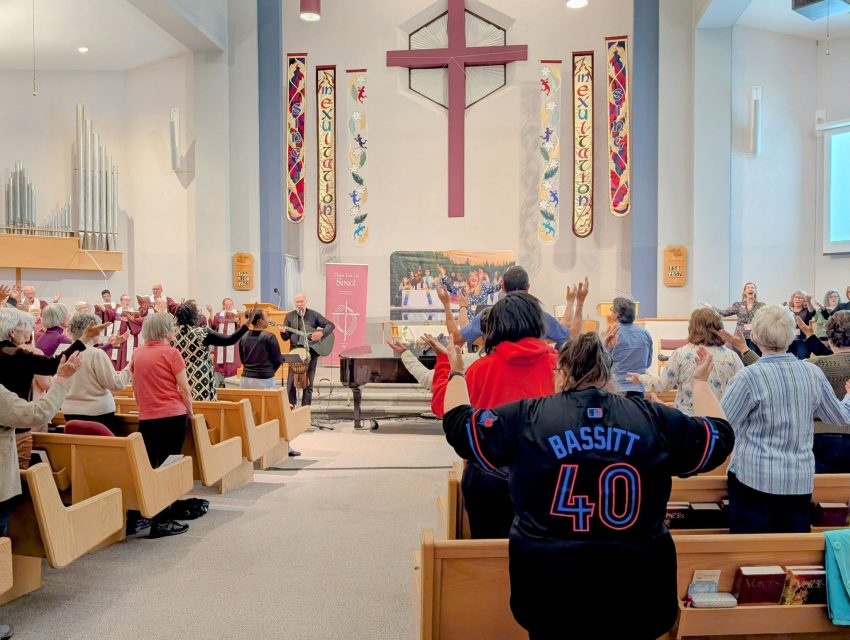
God doesn’t forget us, even when we forget Him. These words are not about a loss of faith; they acknowledge the quiet suffering of those struggling with Alzheimer’s, dementia and other forms of memory loss. It was the first time I ever heard a hymn speak so explicitly and movingly to those losing their ability to remember, and to their family and friends who witness this irreversible decline. I attended the launch of the United Church of Canada’s new hymnal supplement — Then Let Us Sing! — at Orleans United Church on October 24. Over 100 were present at this large, modern suburban church on a Friday evening. We were welcomed by the local congregation’s minister, Reverend Molly Bell, while the Orleans United Church choir, as well as choristers involved with the hymnal project from across Canada, led us through a generous sampling of songs from the publication.
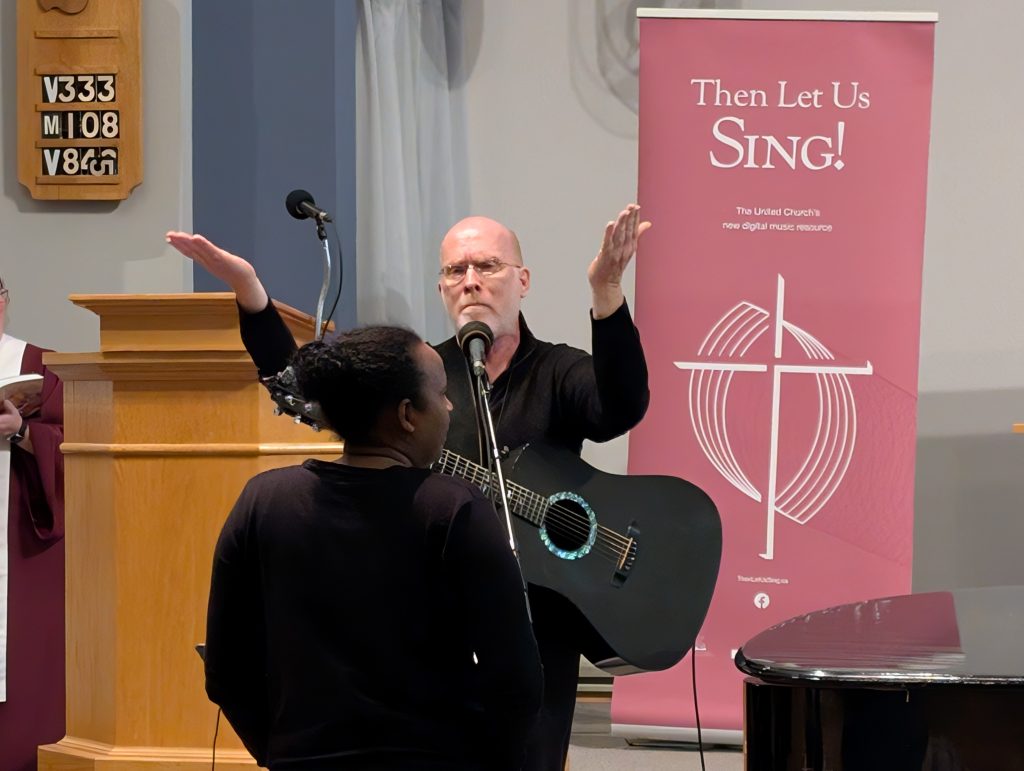
Then Let Us Sing‘s Lead Music Editor, Bruce Harding, guided us through the key themes covered in the hymnal supplement. He served as guitarist, cantor and provided a wealth of insight into the origins of the songs we sang. Some of them were older melodies with new lyrics, others took inspiration from the traditional music of different languages and cultures, and all of them sought to speak to people and include life experiences that have not previously appeared in hymnals. We live in a world riddled with fear and anxiety. Those involved in this project believe that congregational singing can serve as an antidote to that fear. In the preface, we read:
Then Let Us Sing! is a passionately pastoral response to the world God loves. Threats abound: climate crisis, divisions and estrangements within communities, rapid changes in churches, the apparent rise of selfishness and violence. We commit to loving our neighbour even — and especially — as we overcome hatred in all its forms. We are all afraid. Animating congregational song is one antidote to fear. Then Let Us Sing! expands our repertoire with holy courage so we can address our current fears. Remembering Jesus’ command to love our neighbour we become, in our singing, signs of hope for the world.
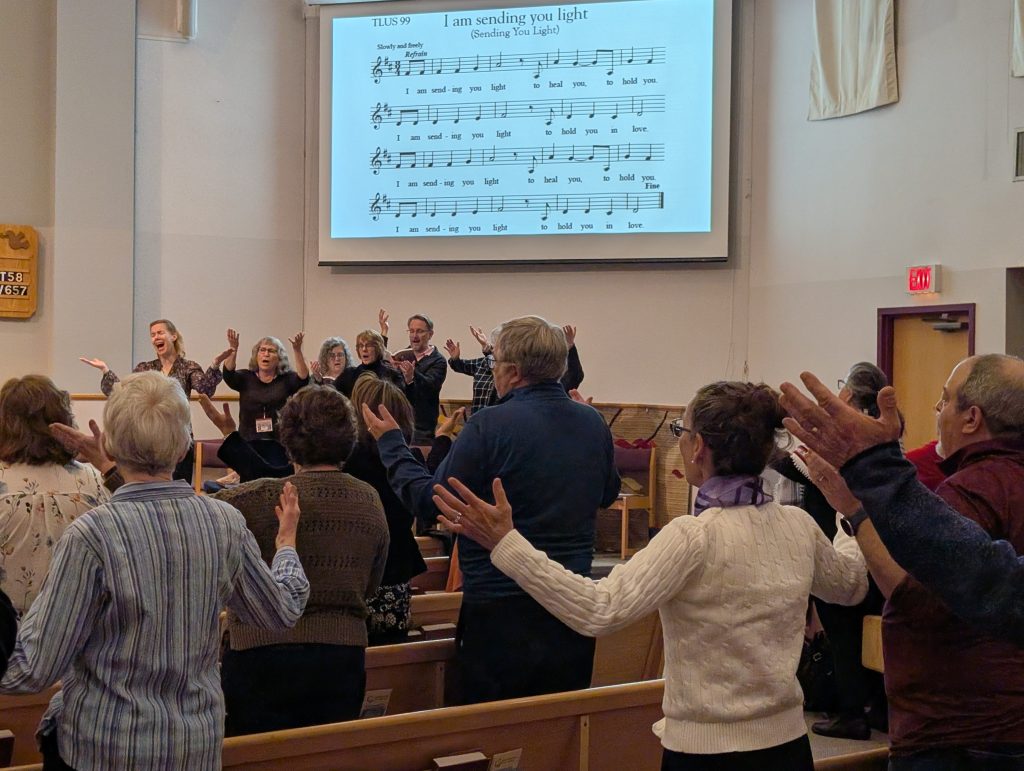
The themes explored in the hymnal supplement include ageing, peace-making, justice-seeking, contemplation, awe and praise, discipleship, doubt, and affirmation. In addition to English, we sang in a multitude of languages, including French, traditional Muscogee, Arabic, Korean, Spanish, Tagalog, and Zulu. In some cases, local clergy who spoke these languages helped lead us in song, including Reverend Kim Vidal from Bells Corners United Church and Reverend Takouhi Demirdjian-Petro, from Trinity United Church in Smiths Falls.
In the dedication, we prayed that this new resource may serve as “a vessel of grace, a tool for worship, embracing hymns long loved and songs yet unimagined.” The hymnal supplement sees its purpose as one intertwined with the pursuit of justice for all. This was reiterated during the commissioning, with the following commitment: “we will sing for those who cannot sing, add harmony to lonely lives and join our voices in the great symphony of creation.”
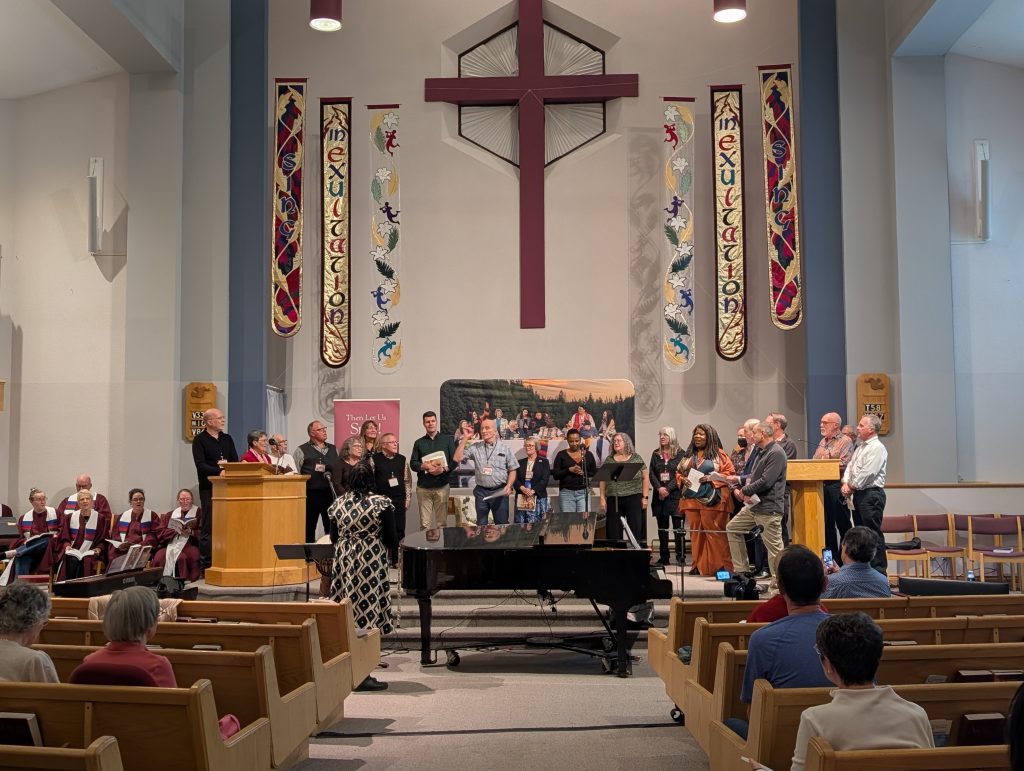
When the many people involved in the creation of this new collection gathered before the congregation, the magnitude of this project became apparent. Many voices, life experiences, gifts, backgrounds and languages came together — and they did so during the height of the pandemic, when they had to collaborate on this creative endeavour without meeting in person. The result is a collection of songs that reflects both where the United Church of Canada is today and where it aspires to be in the future.
This isn’t the first time that the United Church of Canada adds to its congregational canon. Voices United, released in 1996, remains the staple of congregational singing in the United Church. More Voices, published in 2007, expands on this. Then Let Us Sing! further animates congregational singing, but it does not replace these earlier publications. And one aspect of an evolving repertoire that was present at the launch was contemporary praise and worship music. The postlude featured “Way Maker,” a popular song on Christian radio and in many church communities. I have increasingly seen United Church congregations incorporate contemporary Christian music into their services, usually right before or at the end of their liturgies.
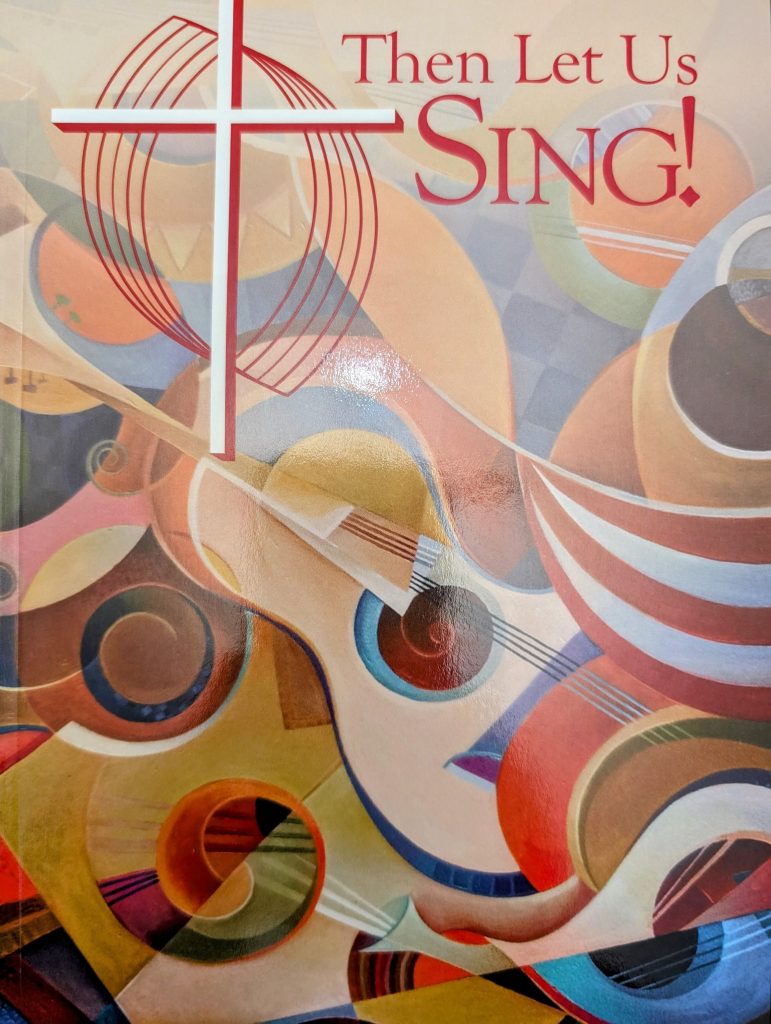
As part of the publication’s ethical framework, it not only sees as its mission to included voices that have previously been neglected or excluded, but to honour the work of musicians, writers and artists by being intentional in respecting copyright. In a world where AI poses an existential threat to the livelihoods of writers, artists and content creators, the United Church’s explicit effort to properly recognize the work of musicians is refreshing.
The United Church Bookstore was present at the launch, making available for purchase copies of Then Let Us Sing! along with other books and resources. This publication serves as a reminder than from its inception in 1925, the United Church — once the most influential Christian denomination in English Canada — is a continually evolving expression of Christianity. It’s one that seeks and also struggles to speak to the faithful and to a diverse society, wherever they happen to be at different points in time.
Christopher Adam

Born in Montreal, Christopher Adam has called Ottawa home for the past twenty years. He received his MA from Carleton University, with a thesis focusing on twentieth century European church history, and a PhD in History from the University of Ottawa. Over the years, he has published widely and works in the faith-based charitable sector in Ottawa.