
The Venerable Kathryn Otley will be installed as the Anglican Bishop of Ottawa on May 9, 2026. She is the first woman elected to lead the Diocese of Ottawa, which has a history stretching back to 1896. I interviewed Bishop-elect Otley on March 20. We spoke about her experience in parish ministry — most recently at All Saints’ Church in Westboro — her personal discernment process when she was proposed as a candidate to become the next Bishop, how she intends to address the different needs of a diocese that includes urban, suburban and rural communities, a bishop’s role in promoting the well-being of clergy, and how she would respond to Gen Z Canadians drawn to ritual and tradition — young adults who may be exploring Anglicanism for the first time.
***
You were elected the eleventh Bishop of Ottawa on February 28, after having been nominated as a candidate and letting your name stand. What did your personal discernment process look like?
I was approached by a number of colleagues saying that they would like to nominate me. In our process, you can be nominated, but you have to discern a call, and then agree to the nomination. Throughout the fall, I was praying deeply about it for a couple of reasons. First, I have only been at my present parish for two-and-a-half years, and I have not finished what I was called to do here. That was a big part of my discernment. Second, I am an archdeacon and as such I have advised the Bishop for over eight years. I’m acquainted with the job and what’s involved. I don’t think I go in with any illusions. I know that it is a lot of work and also a different kind of work than what I was first called to do when I was ordained as a priest. This was a hefty discernment throughout the fall. It involved meeting with colleagues, both active and retired, as well as clergy and laity. I reflected with them on a decision. I listened to them and listened in my prayers to God and to the Holy Spirit.
In December, I made the decision to stand as a candidate. From that point on, I felt fairly at peace. The hard part was the discernment. Once I had discerned, I knew that my task was to share the gifts I believe I have that would be an asset as a bishop. After that, it’s really up to the Holy Spirit and the delegates who would be electing. Am I the kind of person who they will feel is the right one to be a bishop in our Church now? My colleagues that were candidates alongside me were all excellent people — excellent priests and archdeacons. It’s a question of not who is best, but who is right for this time. I’m incredibly honoured that the Synod elected me.
A bishop needs a broad spectrum of gifts and experiences. And a bishop likely needs to seek advice from others as well. Pastoral skill, theological knowledge, management ability and good communication are all required for the job. How does one person excel in all these different areas and what would be your priority, in terms of what you think the Diocese needs the most right now?
I don’t think one person can excel in every area. As an archdeacon, I’m responsible for guiding the placement of new priests into parishes. Parishes often jokingly ask for Jesus. And Jesus is no longer with us on earth right now. I don’t think a bishop can exercise excellence in every area. I believe the role of a bishop is to set a tone in leadership. In my case, it’s non-anxious leadership. It’s also a matter of working well with others, so that we can equip God’s people to do the work that is involved in serving and in building up the body of Christ. That’s not my work alone. It’s my work to equip people. It’s about encouraging them to bring forward their ideas and to celebrate the rich diversity of gifts — really, the abundance of God’s grace working through each of us. I have a leadership role in that; I’m under no illusion. I’m responsible to facilitate that, and to do it in a way that encourages people.
I have a gift of fostering partnerships. In this day and age, that’s essential — working in partnership with non-profits, for-profits, ecumenical, interfaith, municipal, federal, you name it. I’ve worked in all these areas, clearly identifying our Anglican perspective, and then negotiating with partners, listening to their perspectives and goals, and how we can better work together. I’ve done that for over 20 years of ministry.
The most important thing is to be able to work in partnership with people — no longer in silos of Anglicanism, United Church or Presbyterian. Instead of being isolated, we do our best work when we recognize the gifts and strengths in each other, and work together, to serve Christ and to live out our baptismal vows. I think this would be a hallmark of what I imagine my mandate will be.
You mentioned non-anxious leadership, yet we live in an anxiety-ridden world. What are the anxieties and concerns today for the Diocese?
There are lots of them. A key concern for people in the Anglican Church is that while our historic church has lots of properties and the finances to work with, we see the demographic shift as well. Our population is ageing. We see fewer people in our churches. Although the people who are there give generously, we can see that we have to shift to adapt to the changing demographics. We also have to shift our structure. The family structure, which traditional leadership roles in the parish were based upon, has changed. Traditionally, we had one parent who was working and one at home. Today, often both parents are working, we have single-parent families, and single people who work long hours, often at multiple jobs. It’s a very different demographic coming to our churches.
We need to re-imagine our structures of volunteering and leadership roles, in order to better fit the people who are actually attending, still have generous hearts, want to grow in faith, find hope and purpose in our Church. But we don’t want to exhaust them.
Almost 40 years ago, I came to Ottawa to attend Carleton University. On my first Sunday in September, I walked to the nearest Anglican Church. As I walked in the door, they asked: do you teach Sunday school? I said, yes. From that Sunday onward, I taught Sunday school until mid-December. At the end of the year, I came back into the church as though I was a newcomer who they hadn’t seen before. We need to move away from that model. This is an example of old ways of doing things. They were very fruitful, but no longer fit the people who are coming to us with the desire to grow in their purpose and to live out their faith.
There is some polling out in Canada, the U.S. and the U.K. that suggests we may be seeing the beginning of a religious revival among young adults, particularly Gen Z and Gen Alpha. According to Statistics Canada, 22 percent of Canadians between the ages of 15 and 24 attend church at least once per month. This is a higher proportion than among Millennials, Gen X and Baby Boomers. Some youth are discovering church for the first time and are coming with an interest in ritual and tradition. Do you see signs of this in the Diocese? Are you seeing any grassroots growth in church attendance among youth or an openness to faith among younger demographics? And if there is, what approach do they take to church?
I have seen younger families approaching us, some for baptism — both of themselves and their children. People often come looking for a foundation of kindness, care, respect and dignity. They seek this especially in a world that surrounds them with horrible news, where it seems that they are invited to despair. They find in church a place that offers hope and respect. I think it’s true that we see more young people.
I don’t know about your tradition, but at least in ours, ten years ago people would say: ‘if only we changed the music, young people would come! If only we made the worship more open, if only we stopped saying the word Satan, or baptismal vows, they would come!’ I always laughed because I have three children, who at the time were watching Buffy the Vampire Slayer. They had no trouble at all identifying both good and evil. The traditional rituals gave them great comfort. Rituals were touchstones for them. I’ll never forget that around three years ago we were gathered at a synod and a young person stood up to say: ‘if you change the music and you change the tradition, I’m still not going to get up to attend church at 10 o’clock on a Sunday morning. That doesn’t work for me.’ I think building relationships with people who are young adults, or who have young families, listening to what they’re looking for, what kind of belonging they seek — that’s the first step. We need to listen to how they imagine church lived out.
The other thing, Christopher, is that we need to stop focusing just on the concept of being young. Our people, older and younger, crave new expressions of their faith — as well as holding the traditional. When I was writing my responses for the election, I said that the traditional and the more innovative ways of celebrating our faith are not in competition. They are complementary. We need to have both. Here in Ottawa, we have different parishes worshiping outdoors. Recently, at my own parish, we created a passport because we were finding that young people, 15 to 19 year olds preparing for Confirmation, can’t come in every single week for several months, and we can’t go about this the old way. The passport includes certain things they have to do, and then other things that are optional. One of those things might be experiencing another spirituality, such as visiting a synagogue or spending time at Madahoki Farm. We had sessions that explored whether it was okay to doubt. What we found is that this passport, created for that Confirmation age, has become a passport for the whole parish. We have mentors and elders and young people, and even 12-year-old kids, collecting little stamps for their passport. People love doing that. We have ended up creating something that is inter-generational. It does what I said at the beginning: it builds relationships.
Several months ago, I attended a late afternoon Sunday service at Trinity Anglican Church on Bank Street. It’s built as a contemporary service, a little different than Sunday morning and much more interactive. And yet structurally, it followed a liturgy that as a Roman Catholic, I could easily understand. It incorporated reflection, silence, but also discussion. What I noticed is that there were a number of younger people at that service and several of them chose to genuflect. So, in some cases there’s a return to certain practices that might be perceived, in some communities, as more traditional.
Sacred ritual, certainly as a Roman Catholic you would understand this, has a huge role in our lives. I have met people who have been away from the church for a while, and then a person important to them dies. Instead of having a traditional funeral, maybe people just stand up and say wonderful things about that person. They are left without a sense of closure. In the case of funerals, I can have people coming back and asking if we could do a graveside prayer, or if we could gather for a prayer with candles. I don’t think people understand that rituals aren’t just there for us to dress up. They serve a purpose for human beings, Christian or not. Rituals lift us up, comfort us and they can challenge us. For a while, church was rejected as insincere or hypocritical. Pushing all that away, the pendulum is swinging back. People are saying that they want to reclaim this ritual and its meaning.
I have done so many funerals where people have been away from the church for a long time, and will come back to say to me: ‘I didn’t realize that this had so much meaning.’ Years ago, our primary outreach to people who have been away from church would have been funerals. If you do a funeral that is respectful and uplifting, you reach many people who haven’t been to church for a long time. Sometimes that’s the only thing that will bring them back.
The other demographic reality among Anglicans is the international and multicultural dimension. Anglicans form a global Communion. Often in Canadian urban centres, you do see ethnically diverse Anglican parishes, particularly with many parishioners having roots in the Caribbean, Africa or Asia, alongside Great Britain. Do you see this in the Diocese of Ottawa?
Absolutely. We do see that. People are less restricted in going to the church in their neighbourhood. One of the benefits of COVID was putting us all online. People will watch a service online and look for a church where there’s a minister who looks like them, who speaks like them, where they can see people in the congregation that look like them, too. They are going to try that church. In some cases, people drive 40-minutes to attend that parish. We do find more diversity, not as much as I’d like, but more nonetheless. Ever since I was a young priest, I remember a mentor saying: we don’t try to attract people of different cultures, races or diverse genders, and then expect them to come and be only English. We can’t expect to have them come and just be absorbed, and be us. We want to invite people who come from all places and walks of life, to enrich our experience of God with theirs. And we do that without losing what it means to be Anglican.
The Diocese includes areas that are urban and others that are very rural. I would imagine that the realities of parishes in the downtown, in the suburbs and in rural areas could be quite different. How do you balance the different needs?
Our diocese includes a very large geographic area: north of Barry’s Bay, west Quebec, South to Cornwall, Smiths Falls, Perth, Hawkesbury — we cover a large area. We split this region into deaneries. These are smaller, mostly geographical groupings in the Diocese. In the past, we’ve tried hiring a single youth coordinator who wandered all over the Diocese, trying to encourage youth groups. Later, we changed the role to one person who stayed centrally in Ottawa and offered youth internship programs. These were powerful experiences. But only very few youth — maybe 15 in three years — got to experience this. So, we dropped that model and tried something new. We tried a more centralized model, having people come to Christ Church Cathedral in Ottawa from all over our diocese. That’s not practical; the Diocese is just too big. My hope is to leverage deaneries. For example, we can look at a grouping of churches north of Pembroke. Another one might be in the Lower Ottawa Valley. We can look at deanery groupings and providing resources for not only youth, but for outreach and exploring the common issues that each deanery as an area faces, as well as the solutions.
I’ve served in an inner city parish, in a rural parish, and a suburban parish. And right now, I’m in a village. You would not think that Westboro would be any different than Bells Corners. But it’s quite different. In Bells Corners, I drove everywhere. You didn’t walk anywhere. In Westboro, I walk everywhere. I’ve had the richness and gift of serving in many areas in the Diocese. Some issues, such as homelessness, are universal. But it looks very different in Pembroke or Barry’s Bay, than it does in downtown Ottawa. Both the challenges and the solutions are different. When I served in a rural parish, the problem was finding the people in need — they were often at home, starving and freezing, because they couldn’t heat their small home in the country. They couldn’t get out for food. In contrast, here in Ottawa, it’s much more visible. Someone is in the street, they are panhandling and they’re in front of you. I’ve worked in partnership with the City of Ottawa, because they realized that we knew who the elderly were, sheltering in place in more rural corners of the city. We worked together to bring what was needed.
The Diocese being so large, we need to listen to what the needs are, and then respond appropriately.
I’m sure something on the mind of any bishop is to care for the caregiver. Ensuring that the clergy themselves are healthy — mentally, physically and spiritually — must be a concern in diocesan leadership. What role does a bishop play in ensuring wellness among clergy?
A key role. We have annual check-ins. The Archdeacons play the lead role in this, as they check-in with the clergy under their purview. That check-in then goes to the Bishop, who reads each one and responds. Given the size of the Diocese, it’s unrealistic that I’m going to meet with every clergyperson, but I do meet with those who are struggling. As an archdeacon, one of the things I’ve noticed is that we’re so blessed in this Diocese. One of our ministries is the Ottawa Pastoral Counselling Centre. They offer either free-of-charge or low-cost charge professional counselling. I’ve worked closely with their rector and we both agree that many clergy are facing their own issues of how to set aside time for family, and to model that. As a bishop, I need to model that. I need to make sure that I work hard, as we all do, but that I model that I’m taking a vacation, that I’m taking time to be with my family. We need to fill the well that can be drained by the many tasks that are before us.
More and more we are also finding that people attending our churches are suffering from a huge variety of mental challenges. As clergy, when we went through seminary, we were not really trained for that. We were trained to do pastoral visiting. And if we assessed a problem that was beyond us, we would refer. The problem is we don’t have the training of how to boundary ourselves and our parishes safely, and care for the people who need care. We have things like clergy days, when we can get extra training. Part of the answer is that as a bishop I need to model my own self-care.
Looking at the broad denominational tapestry of Christianity, what are the gifts of Anglicanism in particular?
The gift of Anglicanism is the welcoming of all people and also the encouragement to question. Having doubt is okay. We are open to being enriched by different denominations and different faiths. We say that our three-legged stool is Scripture, Tradition and Reason. We are Scripturally-based. We have our great traditions, but the tradition we can trace has changed. There are pieces we have maintained and others we have let go. This will continue. As for reason: God gave us a mind to use. Questioning, self-examination, and humility are vital. I think this is something that we offer. There’s a strength in not having a formal confession and there’s also a disadvantage in that. But we really believe that our prayer shapes our faith and how we live it out. And how we live it out, shapes our prayer. This means that change, adaptation and resilience are built into our understanding of faith and of our place in the world.
Christopher Adam
(Featured photo courtesy of Bishop-elect Kathryn Otley)
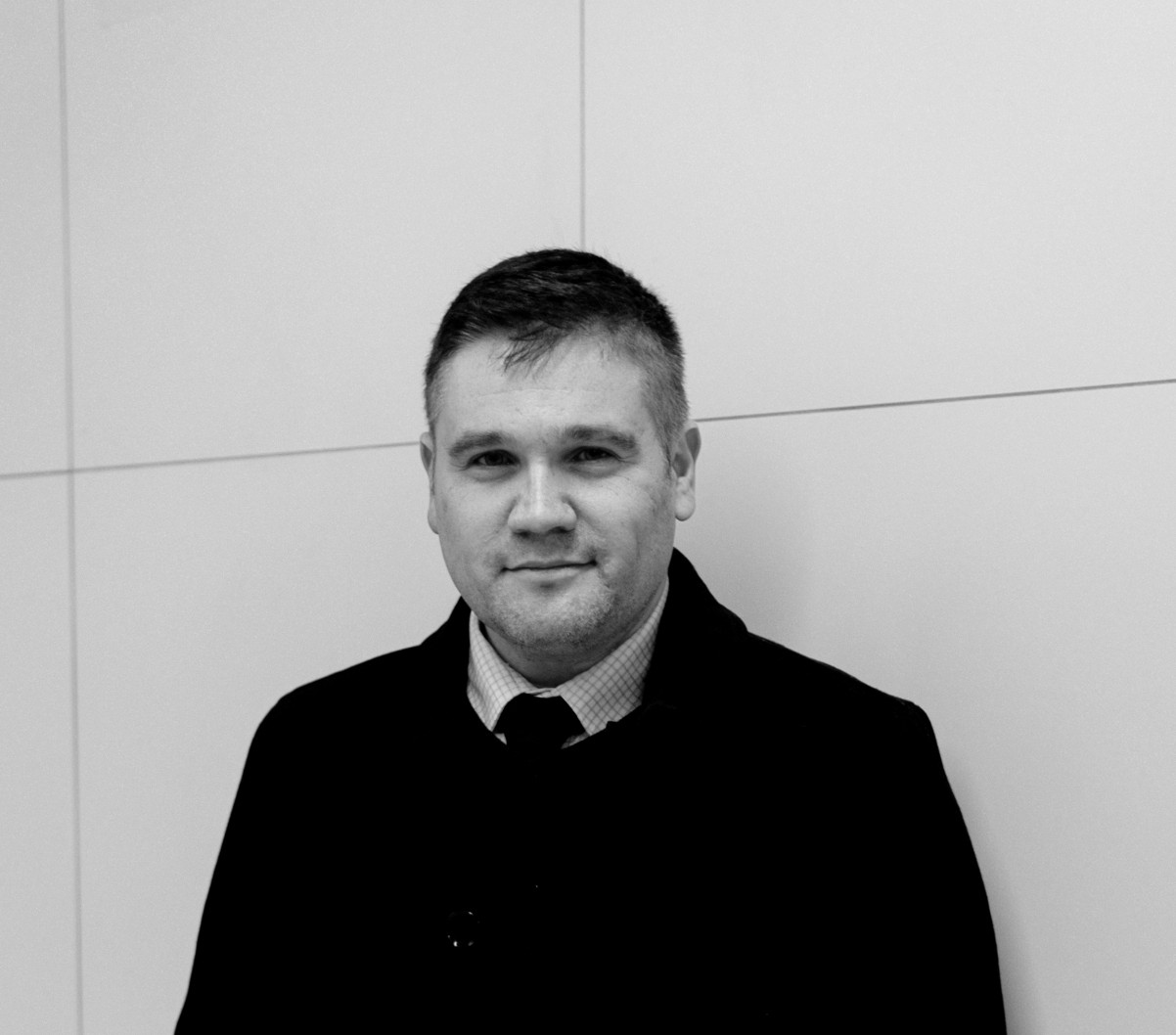
Born in Montreal, Christopher Adam has called Ottawa home for the past twenty years. He received his MA from Carleton University, with a thesis focusing on twentieth century European church history, and a PhD in History from the University of Ottawa. Over the years, he has published widely and works in the faith-based charitable sector in Ottawa.
Congratulations! Perhaps another interview about achievements in five years time?
Thanks very much Chris for sharing this! I enjoyed reading it and gained a better understanding than I had of the wide range of work and activities of the Anglican Bishop of Ottawa.