
A uniquely amicable priest and a thoroughly multicultural congregation — those are the characteristics that struck me the most when I visited St. Elizabeth Parish at 1303 Leaside Avenue on the Second Sunday of Lent, March 1, for their 10:30 AM Mass. Around 80 parishioners seated in the pews came from a wide range of backgrounds. Many were of Filipino and African origins, while others were English and Irish Canadians. St. Elizabeth is also home to Ottawa’s Hungarian Catholic community, with a separate Mass celebrated each Sunday at 12:00 PM. The pastor, Fr. Martin Ndyanabo, is originally from Uganda. During the children’s liturgy, he taught the youngest parishioners gathered around him in the sanctuary an African song. The youth from many different backgrounds joined their priest, as he sang with enthusiasm and a wide smile.
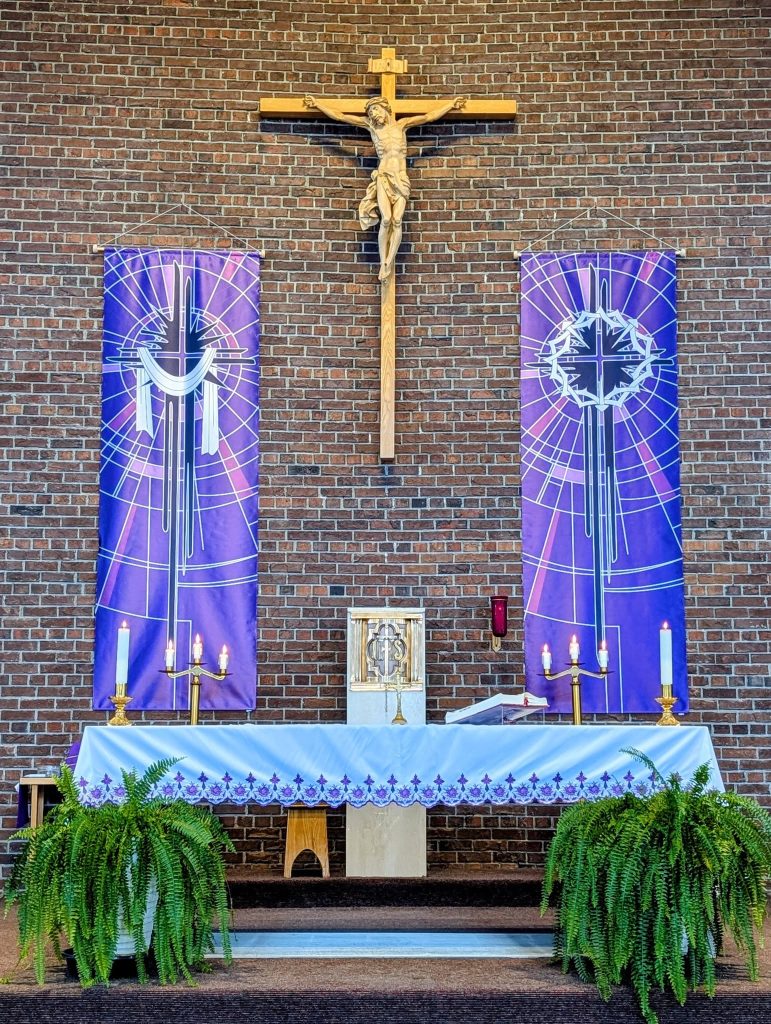
St. Elizabeth, opened in 1965, formed part of the church construction boom that characterized suburban Ottawa in the middle of the twentieth century. Designed to accommodate up to 400 parishioners, St. Elizabeth incorporates mid-century modern architectural aesthetics. The land at the corner of Merivale and Leaside was once home to an Anglican church. The property was sold to the Roman Catholic Archdiocese in 1963 and the new church was erected two years later to serve 350 Catholic families in the area. Fr. John Beahen served as the new community’s first pastor. The low-slung gable roof is a departure from the soaring style often associated with many churches. The clerestory windows that follow the roof-line let in lots of light, especially on bright days. The interior includes exposed beams that span the width of the nave. The space is entirely open, without any pillars or columns that might create a sense of separation. This church was built immediately following the conclusion of the Second Vatican Council and St. Elizabeth’s architecture, especially the open interior, lends itself naturally to the aim of full, conscious and active lay participation.
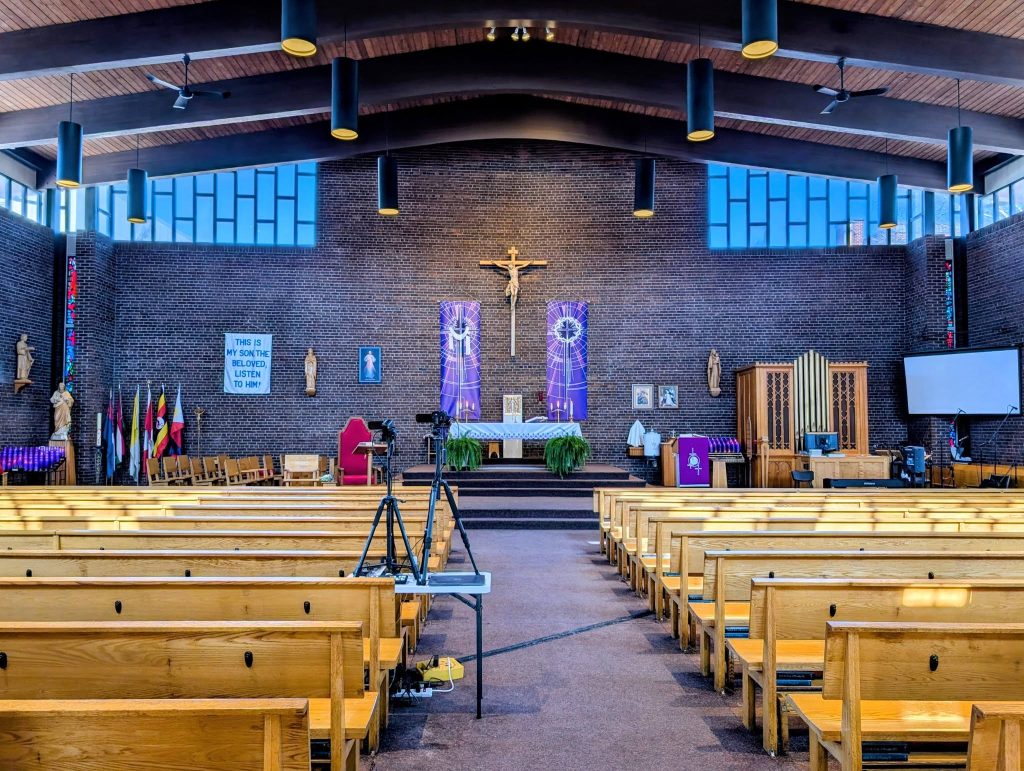
St. Elizabeth’s music ministry included five choristers, a pianist and a guitarist. Much of the musical repertoire focused on praise and worship music. The popular song “Open the Eyes of My Heart” served as the processional, while “Here I am to Worship” filled the church during Communion. Other music included classics of Catholic folk, such as “Come to the Water.”
Matthew 17: 1-9 served as the Gospel reading for the Second Sunday in Lent. In it we hear of Peter, James and John witnessing Jesus’ transfiguration. In his homily, Fr. Martin Ndyanabo spoke about stepping out of one’s comfort zone, which is what the disciples would have experienced as they followed Jesus up a mountain and unexpectedly heard God’s voice from a bright cloud over them. The 54-year-old Fr. Martin spoke about his journey towards ordination happening far away from his home in Uganda, which he left when he turned 19. “People who step out of their place to go somewhere else face that idea of leaving a place that is comfortable to them. You have friends, you have acquaintances, you know the food, you can travel by night, get around, and everyone knows your name. And then sometimes you start a life elsewhere and right when you begin getting used to it, it’s time to go again,” Fr. Martin said. He continued:
“Many times, God sends us to places that take us out of our comfort zone. In the last ten years, a new term appeared in our lexicon. People would say that they weren’t feeling safe. They would say that they talked to someone and the conversation made them feel unsafe. This is, in fact, the first temptation for all of us, myself included. The first instinct is self-preservation and my own safety. Sometimes the Lord tells us to go to places that are unsafe. And that involves taking a risk.”
Fr. Martin gave an example of a young man from Switzerland who, years ago, showed up in his hometown in Africa with nothing but a map and a backpack. He asked to be given accommodation in a shed. This young Swiss man challenged Fr. Martin, who was a student at the time, to think of how God sometimes asks to go out into the world and take risks. Sometimes it doesn’t have to mean travelling a long distance — it could involve reaching out and helping someone we don’t know, someone completely different from ourselves.
Fr. Martin also announced a farewell potluck on April 18 after the Saturday 4:30 pm Mass for Fr. Matthew Livingstone SJ, the Jesuit who has assisted at St. Elizabeth Parish for the past three years. The Pastor noted what a great gift he had been to the Parish — especially to the Hungarian community, as he had presided at their Masses. In a nod to the diversity found at St. Elizabeth’s, Fr. Martin invited parishioners to contribute meals from their respective cultures, as an expression of the Parish’s multiculturalism.
After Mass, all were invited downstairs to the Parish Hall for tea, coffee and freshly-baked scones — courtesy of the Ladies Auxiliary, whose members also organized a bake sale. Several of the tables in the hall were covered with bright green table clothes, in preparation for a St. Patrick Day’s lunch with live music that the community is hosting on March 17. It goes to show that no matter how diverse the parish has become, those Irish roots remain strong.
Christopher Adam
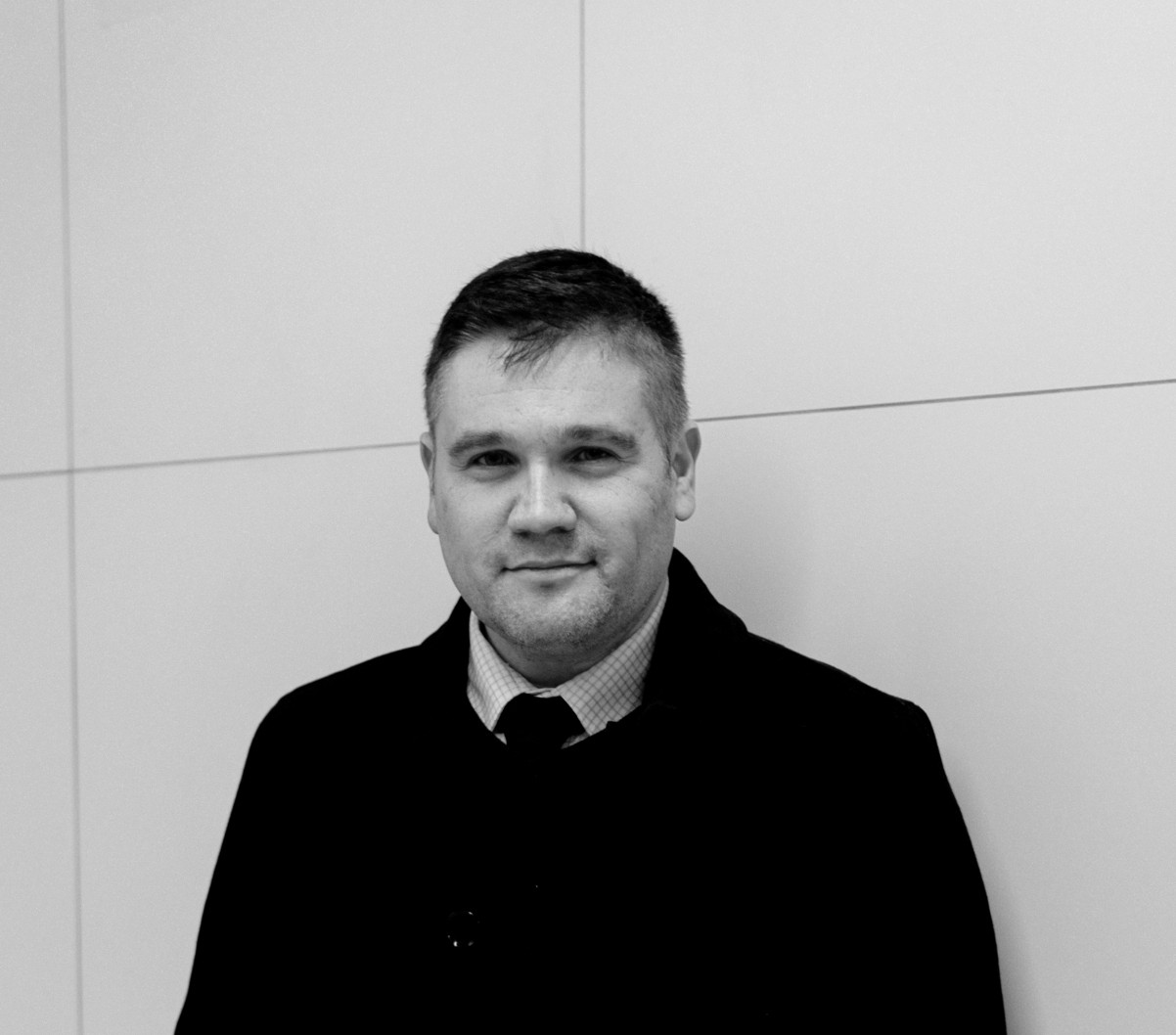
Born in Montreal, Christopher Adam has called Ottawa home for the past twenty years. He received his MA from Carleton University, with a thesis focusing on twentieth century European church history, and a PhD in History from the University of Ottawa. Over the years, he has published widely and works in the faith-based charitable sector in Ottawa.
My late sister Janet Avery attended St. Elizabeth school, it brought back many memories.
I lived on Kirkwood Ave in the 60’s and would walk with my then toddler son and go to mass.
What an interesting project, describing various faith communities with objective interest! While not a parishioner, I know St. Elizabeth church from frequent visits. This article allowed me to see it through new eyes. The background information provided invites people to attend and adds to a person’s experience. My thanks to the people behind this.