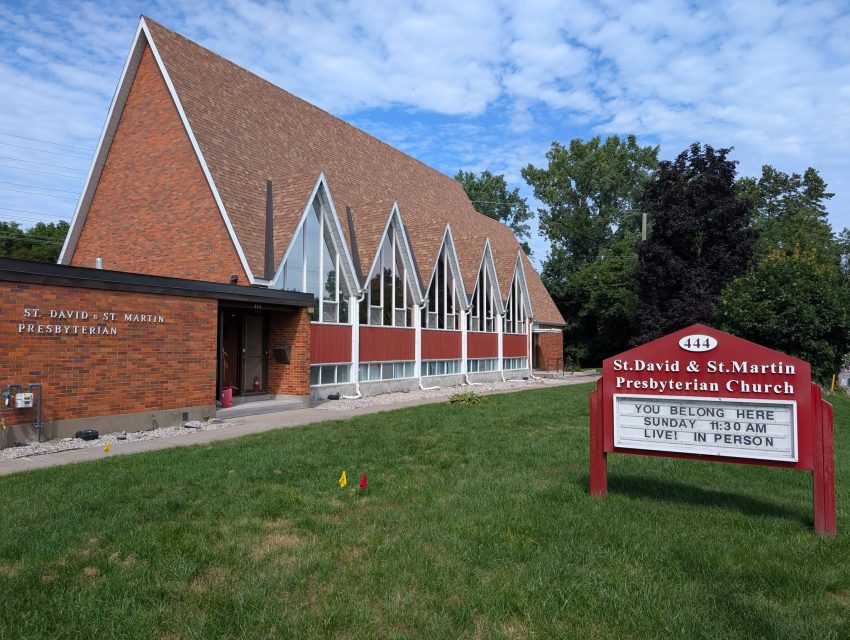
Built in 1959, St. David & St. Martin Church in Manor Park is a mid-century structure with a light Neo-Gothic twist. On August 16 at 11:30 AM, I joined 30 members of the friendly little congregation, with several more connecting virtually, for their Sunday service. The gregarious David Wright, one of the community’s elders, was the first person I met. He came up to me and introduced himself, noting that when the church attracts the occasional visitor from afar, they have a tradition of giving a small prize. I shared that I wouldn’t qualify, living as I do merely one kilometre away. David made sure to let me know that refreshments were available after the service and that I was most welcome to join the community.
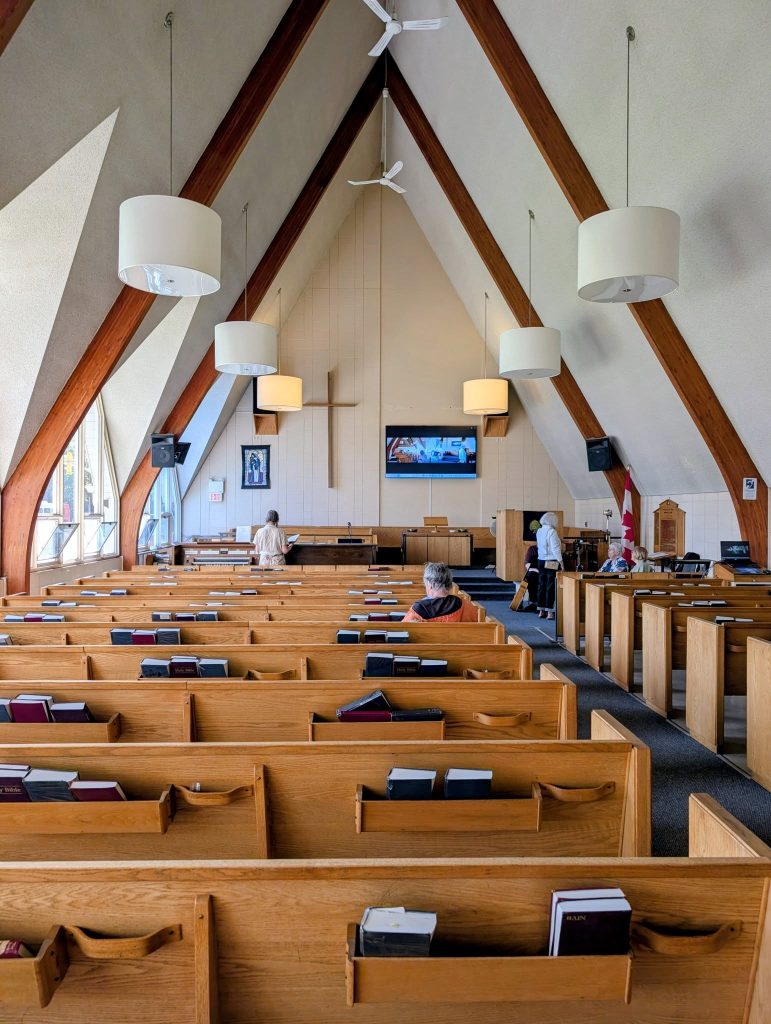
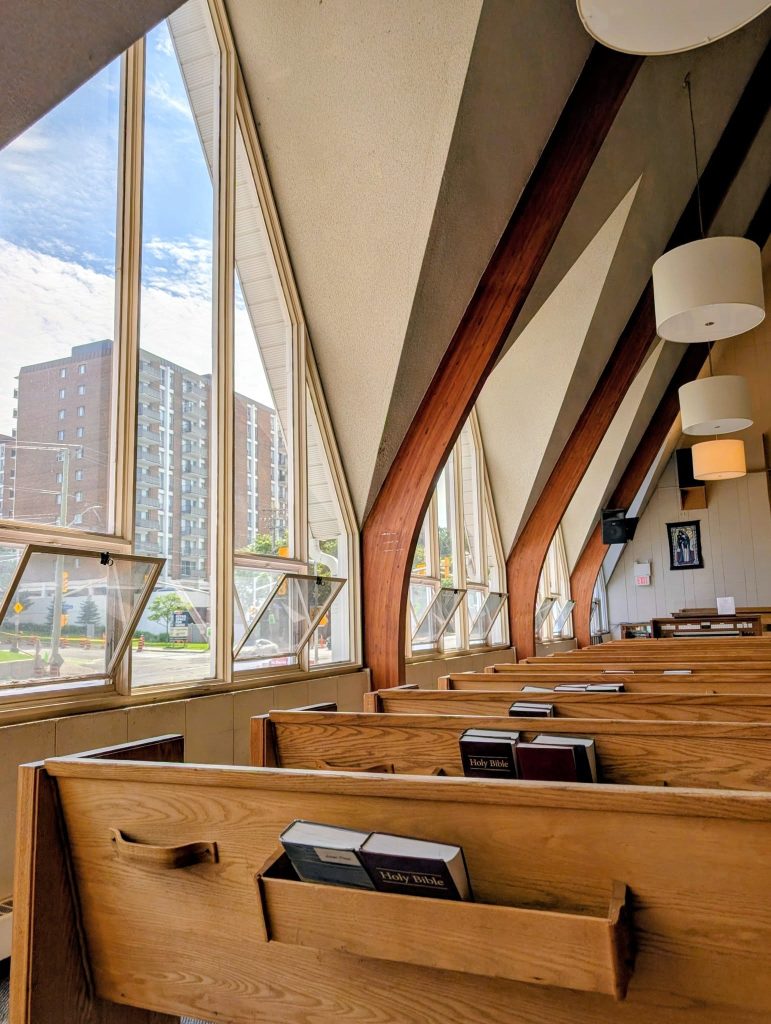
The church at 444 St. Laurent Boulevard began as St. Martin’s Presbyterian Church in June 1959, when it was dedicated and opened to the faithful. The Ottawa Journal covered the dedication in its June 19, 1959 issue calling it a “splendid” structure and noting that it was built at a cost of $132,000. It was designed to accommodate up to 300 people. The church was dedicated by the Moderator of the Ottawa Presbytery, the Reverend Peace Montgomery, with 250 people present. Clergy from the older communities of St. Andrew’s and St. Giles participated as well. The Journal article noted the church’s unique architecture, especially the steeply pitched roof and the grand windows designed to let in lots of natural light.
The church became known as St. David’s & St. Martin’s when St. David’s Presbyterian Church at 473 Donald Street, in Overbrook, closed its doors in 1968 following amalgamation with the Manor Park congregation. The congregation held an evening service of worship to mark the amalgamation on Sunday, September 22, 1968. The cornerstones of the two church communities that formed the current congregation are preserved in the sanctuary.
During the August 16 service Jennifer Channen, the pianist and organist, accompanied the singing of hymns. She helped to establish a sense of solemn reflection by playing preludes beautifully before the service. “Jesus, Jesus, Jesus in the Morning” served as the opening hymn. Other hymns at the service included “Jesus, Stand Among Us,” and “God of Grace and God of Glory.” The service also incorporated the audio-recording of a song from Kenya entitled “Msingi,” originally performed by Jemmimah Thiong’o. In addition to the hymns and this African song, members of the congregation shared a praise and worship song on guitar entitled “Greatly Blessed, Highly Favoured.”
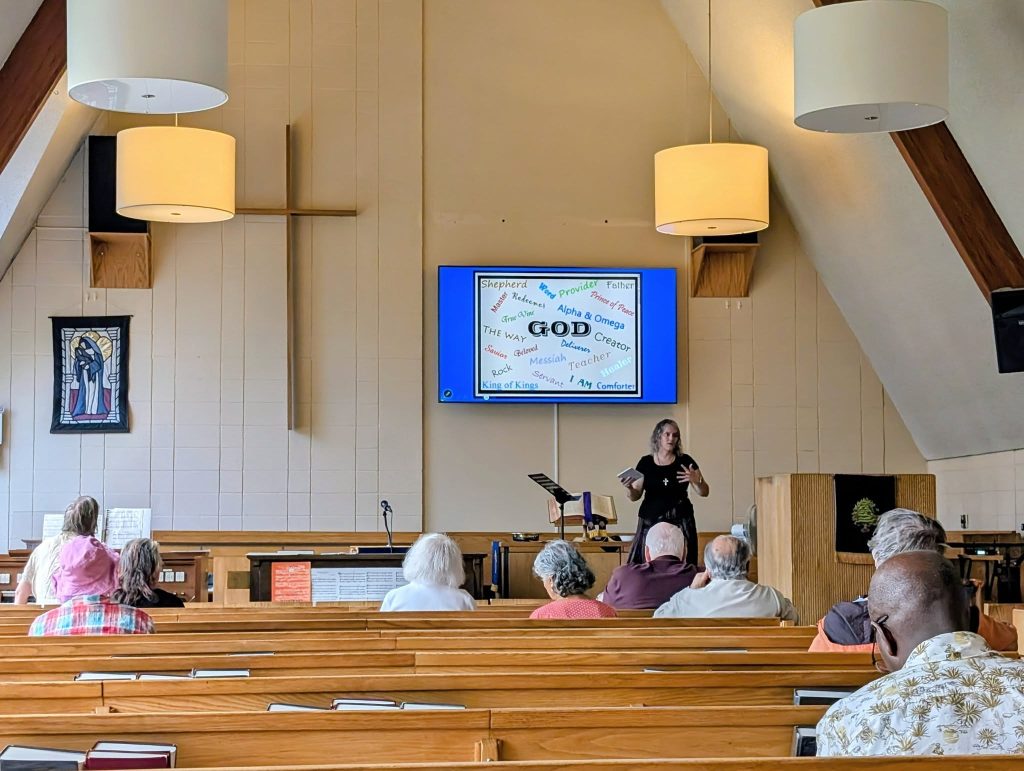
Reverend Meg Patterson, who also ministers at St. Stephen’s Presbyterian Church, began with a brief, interactive lesson for the youngest members of the church community. Two children in the congregation were invited up for a short reflection. Reverend Patterson talked about asking God for help through prayer. God might answer our prayer in surprising ways, in ways we don’t expect, or maybe we won’t even understand how God is answering us. Yet God is always listening. “When we offer our prayers to God, they bloom and they grow, like a well-watered flower,” she said.
In her main sermon, Reverend Patterson explored the Book of James and specifically the seminal statement from James 2: faith without deeds is dead. Reverend Patterson shared:
If you know your church history, you might be able to anticipate why this was controversial. Particularly from the Reformation, the belief was — and the teaching remains — that our actions cannot save us. That is what Jesus is for. When James spends so much time talking about actions, some people get nervous, including Martin Luther, the father of the Reformation. I don’t think James ever said your actions save you. I think he understood that that was Jesus. We need a Saviour because we can’t do it on our own. But by the grace of God, we can try to be more like Him. If your actions do not reflect that faith, then your faith isn’t real. It isn’t alive.
She pointed to the case of travelling merchants, noting that James was likely referring to them. They claimed to be followers of Jesus, while also having become wealthy and increasingly boastful. When we trust only in ourselves and in our own abilities, with no acknowledgement of our vulnerabilities and no humility, we increasingly leave God out of the equation.
Reverend Patterson also introduced the congregation to the Roman Catholic and Anglican tradition of the Collect. These are prayers that follow a particular format. First, they verbally acknowledge one of the many attributes of God. This is followed by the petition and then the hope or aspiration of what having the petition answered would do. Members of the congregation were given small pieces of paper with that format, to help them create their own Collect at home.
Following the service, the congregation gathered for juice and cookies in the hall below the church. While the congregation may be modest in size, I saw just about every generation represented in the pews and people of many different backgrounds.
Christopher Adam
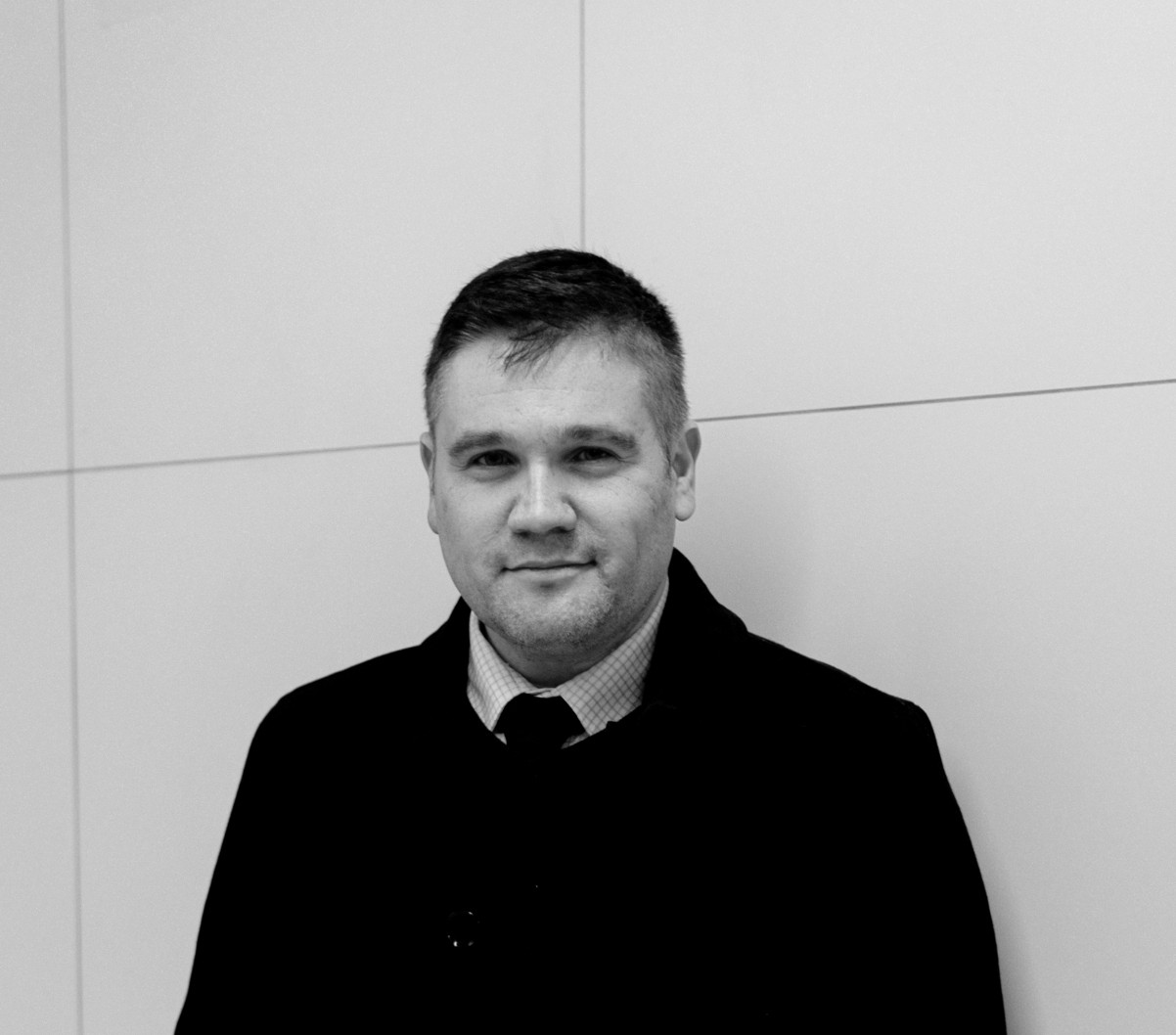
Born in Montreal, Christopher Adam has called Ottawa home for the past twenty years. He received his MA from Carleton University, with a thesis focusing on twentieth century European church history, and a PhD in History from the University of Ottawa. Over the years, he has published widely and works in the faith-based charitable sector in Ottawa.