
It’s best not to underestimate small-town Ontario: they have some of the grandest churches in the province. Arnprior’s St. John Chrysostom Parish, completed in 1908, is an example of the best in ecclesial architecture in our rural communities. Admittedly, Arnprior is increasingly a commuter town, located just beyond the western peripheries of Ottawa, merely 65 kilometres from the downtown core. I drove out to St. John Chrysostom early in the morning on Sunday, February 1 and attended the 9:00 AM Mass. I reminded myself that despite the proximity to Ottawa, this parish is part of the Diocese of Pembroke. As I walked in, printed bulletins were available in the entrance and I could hear a gentleman with a clicker in hand counting each person entering the church. By the time Mass started, I estimated that close to 200 parishioners gathered in the pews.
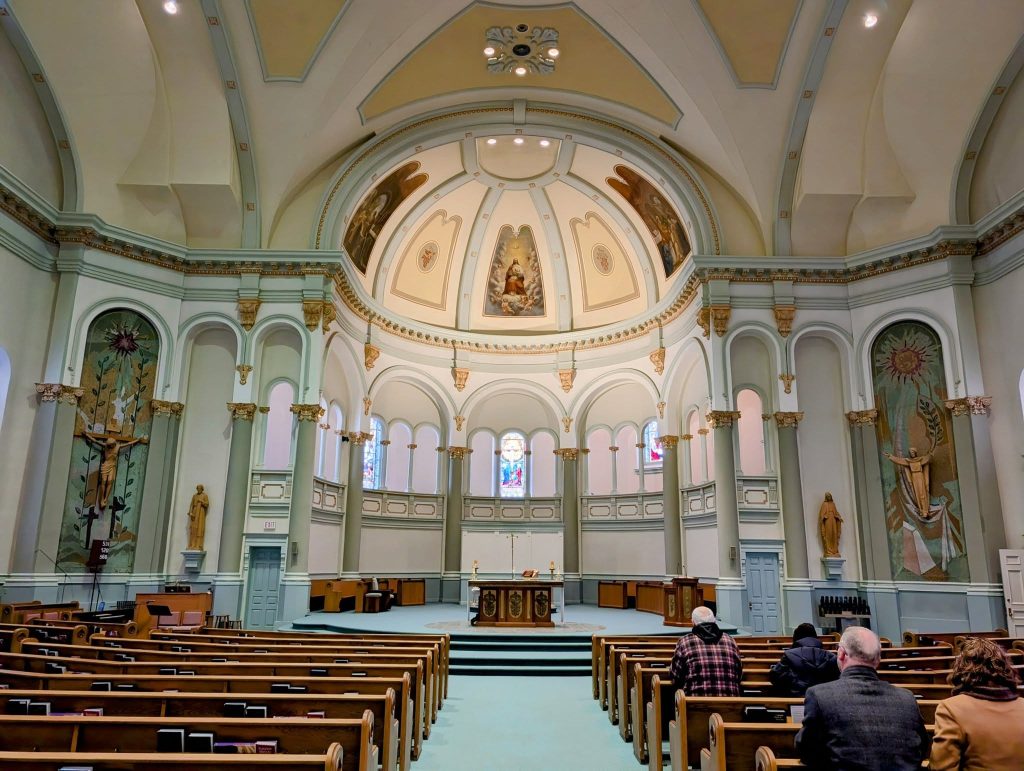
When in July 1907, Bishop Narcisse Zéphirin Lorraine of Pembroke laid the cornerstone for the church named after St. John Chrysostom, the July 5, 1907 issue of The Ottawa Citizen noted: “a handsome church will be built, probably the finest in the Ottawa valley outside of Ottawa city.” As it happened, the laying of the cornerstone might have gone very badly. The Citizen noted that a “severe electrical storm” passed through the region that very afternoon, and while it caused damage in the adjoining townships, Arnprior and the ceremony at what would soon be St. John Chrysostom Church was spared the wrath of nature. The cornerstone was placed 1,500 years after St. John Chrysostom’s death. The church incorporates three architectural styles: Gothic Revival, mostly on the exterior, Romanesque Revival and some Neo-Classical elements.
Fr. Robert Ryan served as the presider and homilist at the 9:00 AM Mass, while the youthful Fr Matthew Whelan, a son of the parish and baptised here some decades ago, concelebrated. He is a priest with the Legionaries of Christ and based in Italy, but had been visiting his hometown. I heard him converse with a parishioner in Italian with great ease.
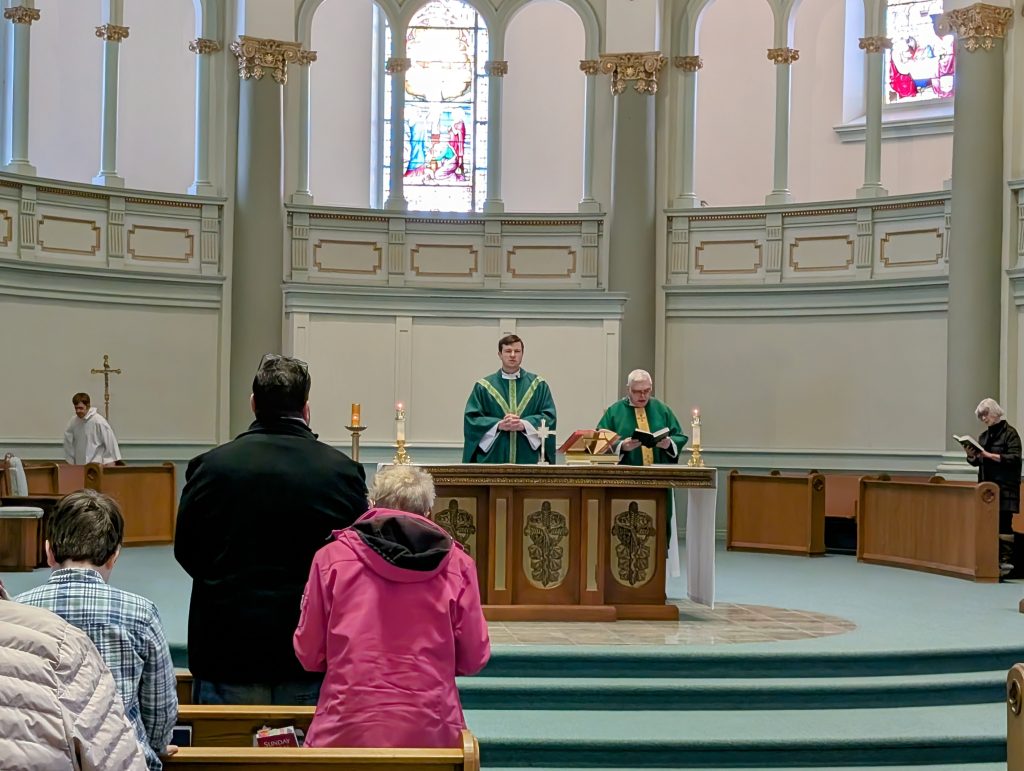
In his homily, when speaking of Gospel account of the Sermon on the Mount, Fr. Robert noted that Jesus — from that mountain — saw each person in their uniqueness, in all their spiritual and temporal needs, as well as seeing all their strengths and weaknesses, their frailty and sin. “He saw each of us as well. God sees each human being as distinct, each individual human life,” he added. “For St. Matthew, Jesus is the new Moses, who has come to fulfill the law of the prophets. From this mountain, he will give the constitution of His Kingdom. In the Scriptures, on mountaintops, some of the most important encounters with God take place. From mountaintops, there is a true perspective of the size and proportionality of all of reality. Jesus is about to adjust the true perspective on the meaning and value of all things,” Fr. Robert shared.
Fr. Robert emphasized that Jesus is not only the teacher, but also the judge. “As judge, Jesus teaches us the new standard of righteousness. That standard expands on the minimalist interpretation of the law that was prevalent in His day. “Jesus will say some astounding and moving things,” Fr. Robert said. We are called to love our enemy, to do good to those who persecute us, to be perfect, as the heavenly Father is perfect. “His words are not for the faint of heart, not for the spiritually lazy,” Fr. Robert said. “There is a great need today for preachers and disciples to speak forthrightly and honestly. In a world of conflict, Jesus proposes the challenging and difficult path of peacemaking and reconciliation. In a world of impurity, where people are used and exploited, Jesus calls for purity. In a world where people say, ‘it is what it is,’ Jesus commands us to have the hunger and thirst to strive for justice,” he added.
In following Jesus, people must expect persecution, which “is the sure sign that you are a card-carrying Christian,” Fr. Robert shared.
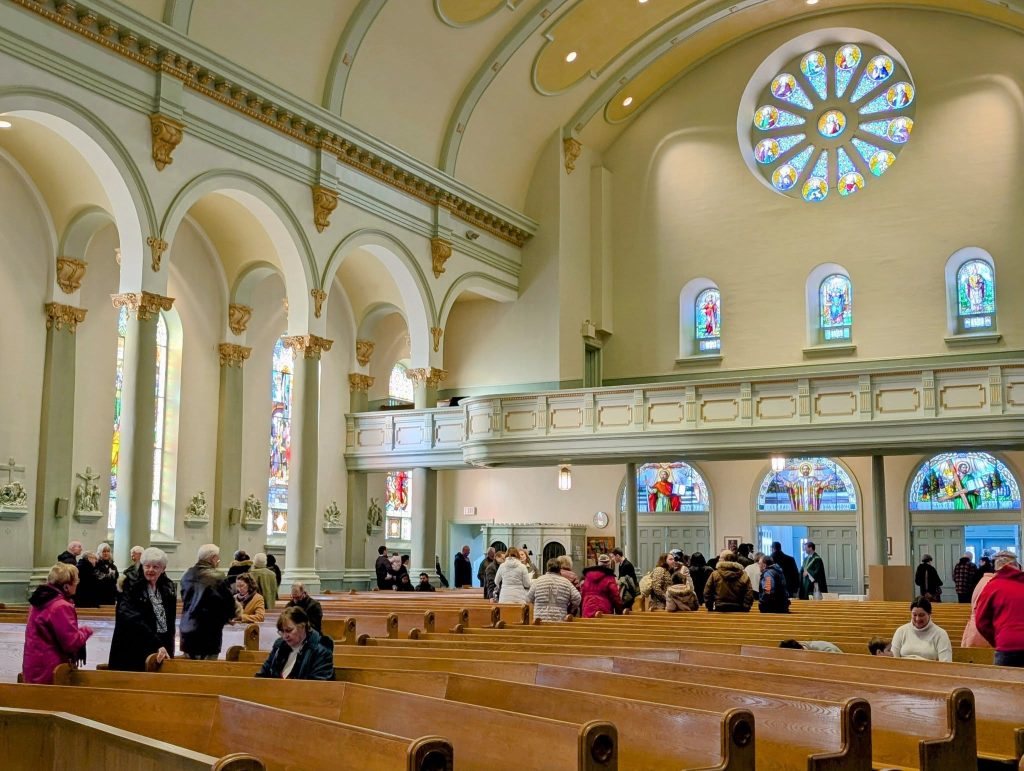
An organist accompanied the congregation on what I believe was an electric organ, with hymns selected from the Catholic Book of Worship. While there was no choir, nor was there a cantor, Fr. Robert — with a booming and capable voice — led the congregation in song on several occasions. Among the hymns was “Immaculate Mary,” sung to the tune of the Lourdes Hymn, along with “For the Fruit of All Creation,” and “For the Beauty of the Earth.”
As Mass concluded, all those present were invited to the meeting space below the church, where coffee, lemonade and a wide array of sweet and savoury treats, as well as fresh fruit awaited. The spread included a traditional favourite of receptions: deviled eggs. The first Sunday of every month is Social Sunday at St. John Chrysostom — a good opportunity for the community and visitors to gather and mingle after the liturgy.
Christopher Adam
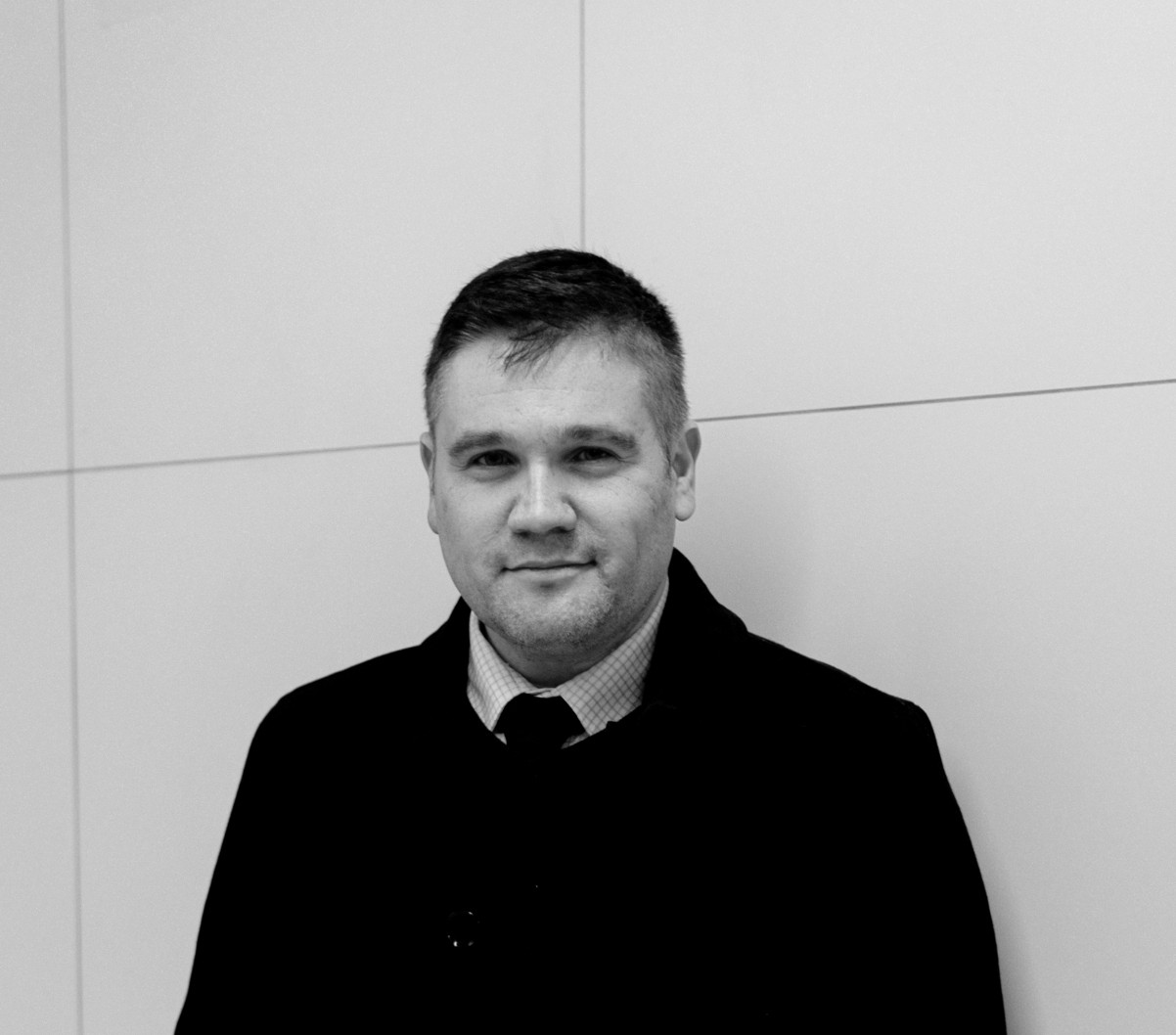
Born in Montreal, Christopher Adam has called Ottawa home for the past twenty years. He received his MA from Carleton University, with a thesis focusing on twentieth century European church history, and a PhD in History from the University of Ottawa. Over the years, he has published widely and works in the faith-based charitable sector in Ottawa.