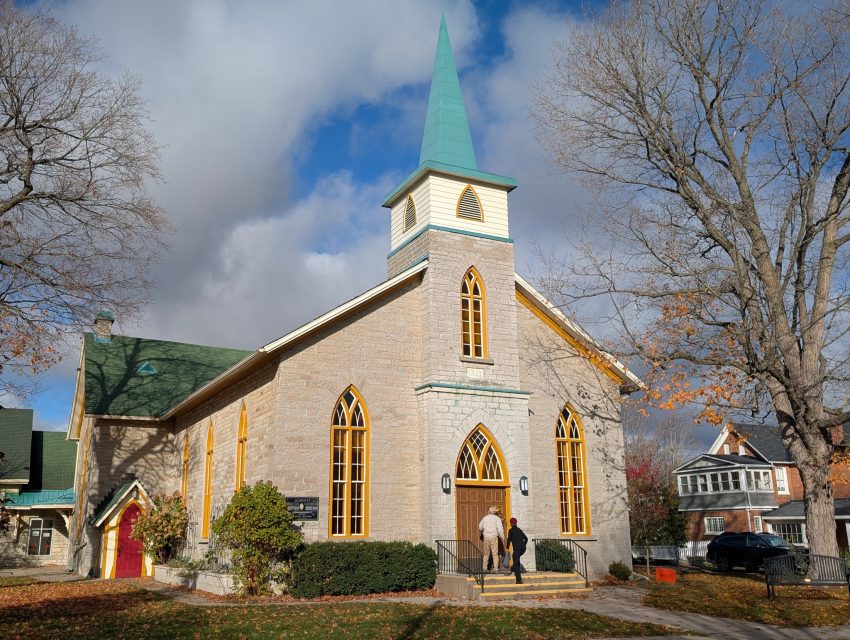
I visited Almonte United Church on a breezy, brisk Sunday and met Reverend Heather Kinkaid who took the time to greet every single person in the pews before beginning the service. Her interaction with the faithful was more than a passing hello. She exchanged a few sentences with everyone, she listened, knew about what was happening in their lives, asked about recent trips or holidays and she introduced herself to me as Heather, welcoming me to her church. Although Almonte United Church isn’t a large congregation, with perhaps 50 people present when I visited on October 26, I met two people that morning who shared that they had joined the church in the past few years. Almonte United still has the capacity to draw new people in, and Rev. Kinkaid’s kind welcome is undoubtedly a big part of this.
The main source for readers seeking to learn more about Almonte United’s history remains Winston A. MacIntosh’s book The Wind Bloweth Where it Listeth: A History of Almonte United Church and its Roots, covering the period from 1821 to 1981. There was no physical church building to speak of in 1821, but as the author correctly notes: the faithful form the church. Methodists and Presbyterians gathered in those early years in what was then Ramsay Township. As an introduction to the book observes with a mix of candour and lyricism:
“The Christian zeal and genuine sacrifice of our pioneer members in building a fine stone church in wilderness and, within thirty years, building a new and larger church in town are worthy of our deepest gratitude. At the same time, it would be dishonest to suggest that all past members were pious saints. They were much like ourselves, mixed in their motives and goals, keeping on eye on heaven and the other on the cash box, but hoping to somehow serve God.”
The current stone church at 106 Elgin Street dates back to 1861. It was initially known as St. Andrew’s Presbyterian Church. While much of the church’s exterior today is identical to the original structure, the steeple has been rebuilt and is far less ornate than what it was, at least based on archival photos from the early twentieth century.
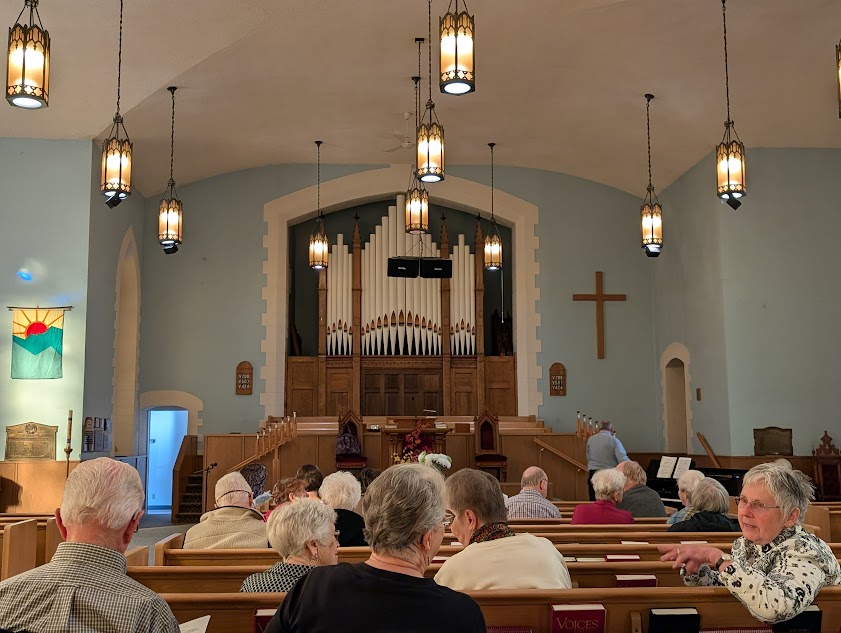
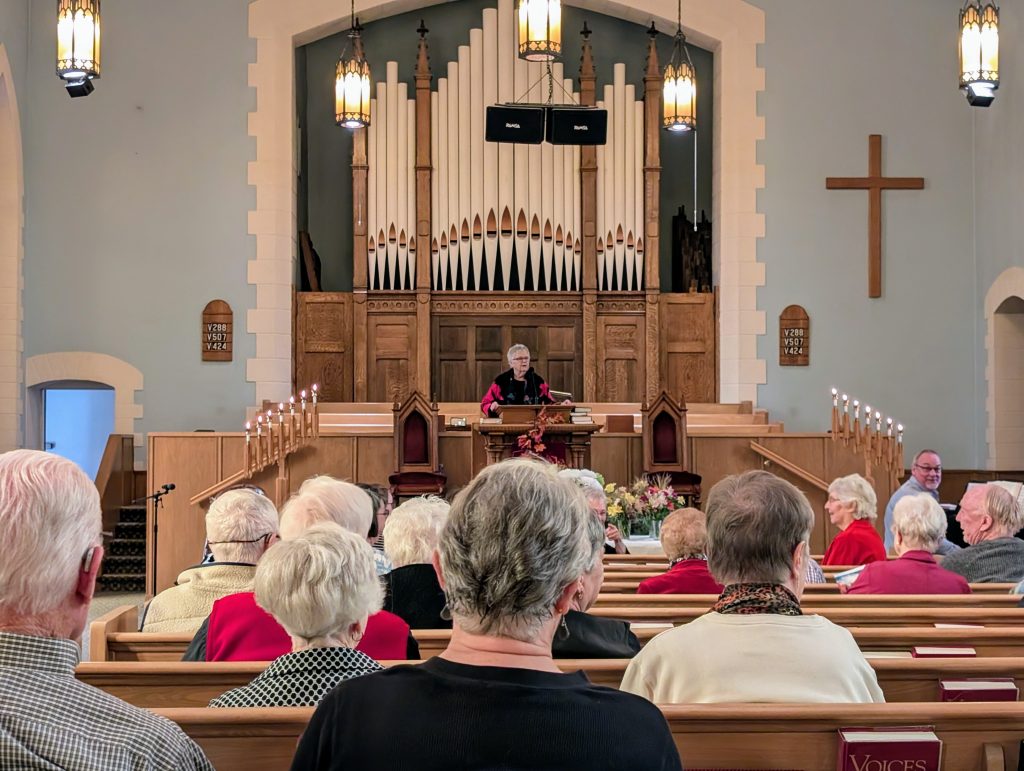
The choir’s anthem at this World Peace Sunday service was “Let there Be Peace on Earth,” with nine dedicated choristers providing music throughout the liturgy. In her sermon, referred to in this congregation as a meditation, Rev. Kinkaid focused on Romans 14: 13-19. The readings provided a lesson in the politics of the Roman church. Arguments ensued about what to eat or not to eat, given Jewish food laws. A growing divide developed when Christians sought to dispense with these restrictions. It’s a story of church politics, but also of peace. Rev. Kinkaid shared a reading from a Jewish prayer book. It tells us that we have power, bestowed by God, to clear away slums, bring hope and peace. We pray for the determination to become an instrument of peace, rather than merely people who wish for it.
The hymn from Voices United “May the God of Hope Go With Us” drew us deeper into the theme of becoming instruments of peace:
May the God of hope go with us every day,
filling all our lives with love and joy and peace.
May the God of justice speed us on our way
bringing light and hope to every land and race.
Praying, let us work for peace,
Singing, share our joy with all,
Working for a world that’s new,
Faithful when we hear Christ’s call.
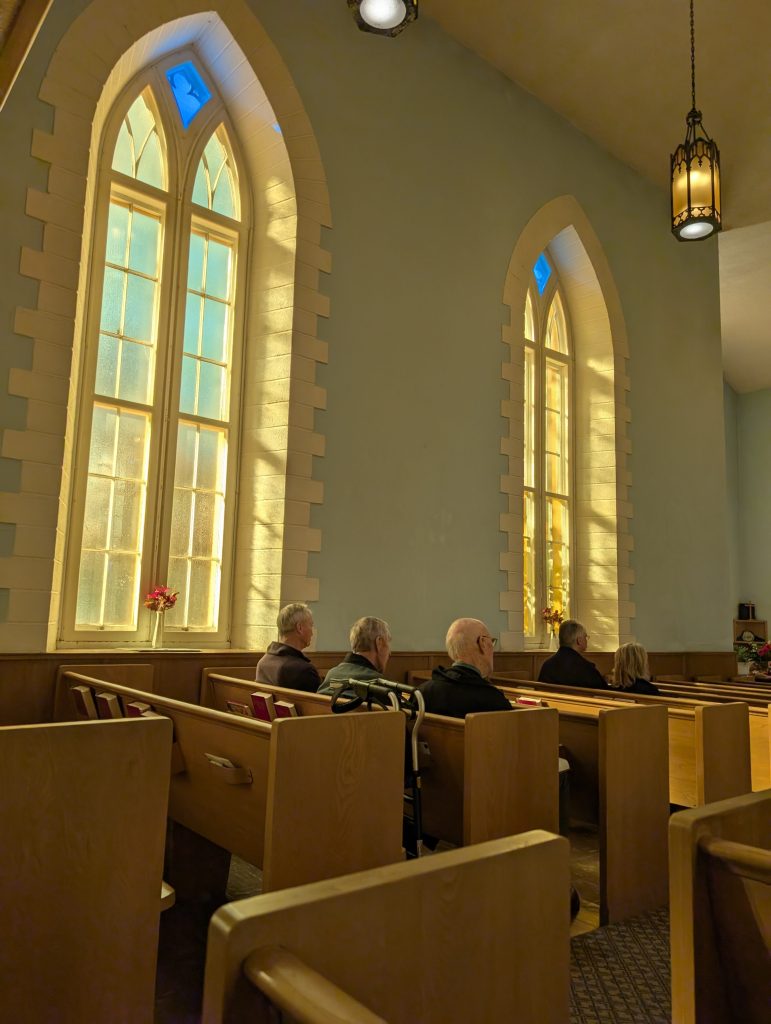
Almonte United Church is close to the earth and close to its people. During the liturgy, we heard of the plight of local farmers due to this past summer’s drought, particularly the charitable Food Grains Project, in which the faith community participates. The poor harvest has made its impact felt. The community also celebrated all those in the congregation with birthdays in October, inviting all to stay for birthday cake after the service. As the service came to a close with the singing of O Canada, sunlight — peaking out from behind the clouds — streamed in through the yellow stained glass windows, illuminating the church in a warm glow.
Christopher Adam
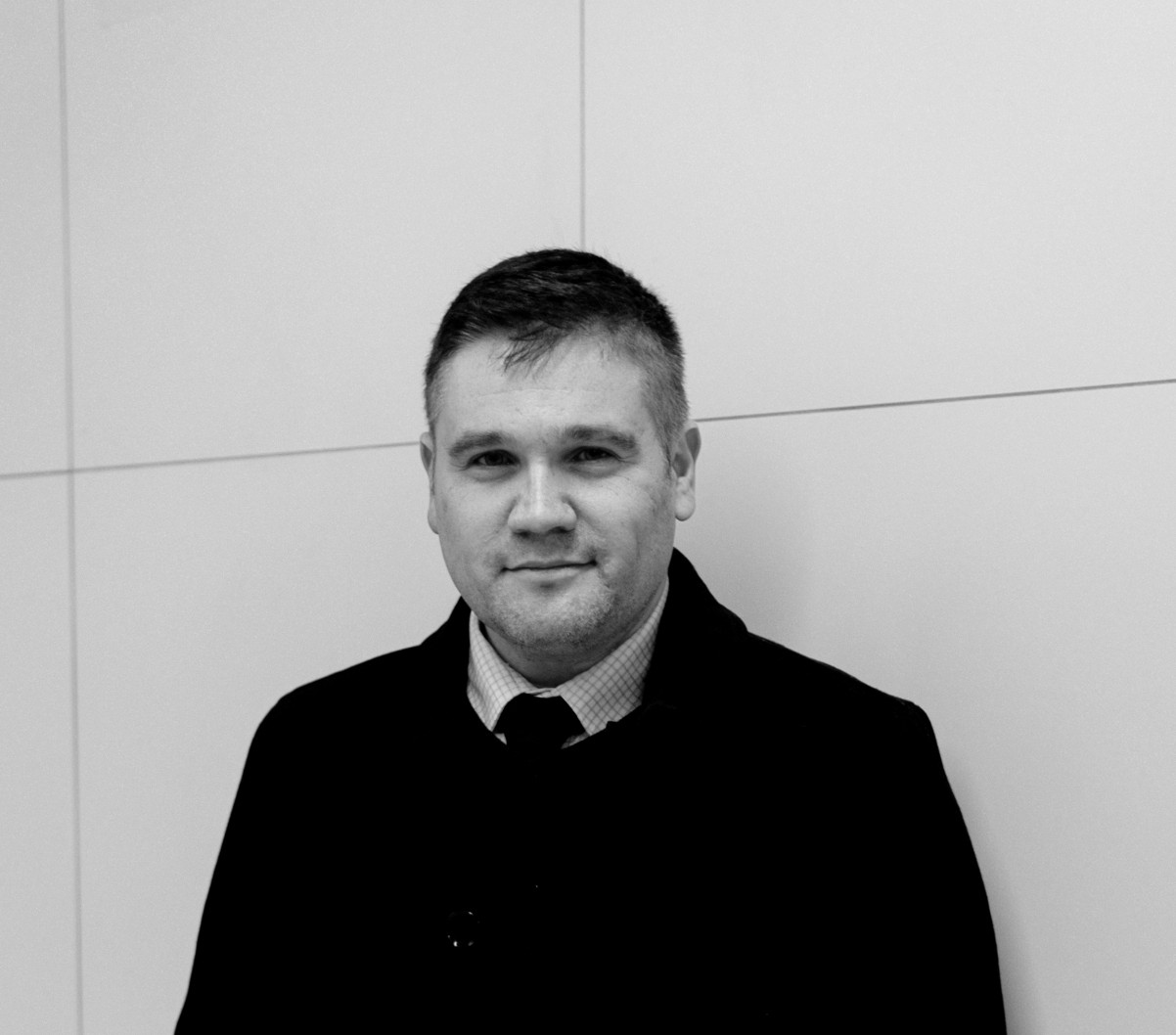
Born in Montreal, Christopher Adam has called Ottawa home for the past twenty years. He received his MA from Carleton University, with a thesis focusing on twentieth century European church history, and a PhD in History from the University of Ottawa. Over the years, he has published widely and works in the faith-based charitable sector in Ottawa.