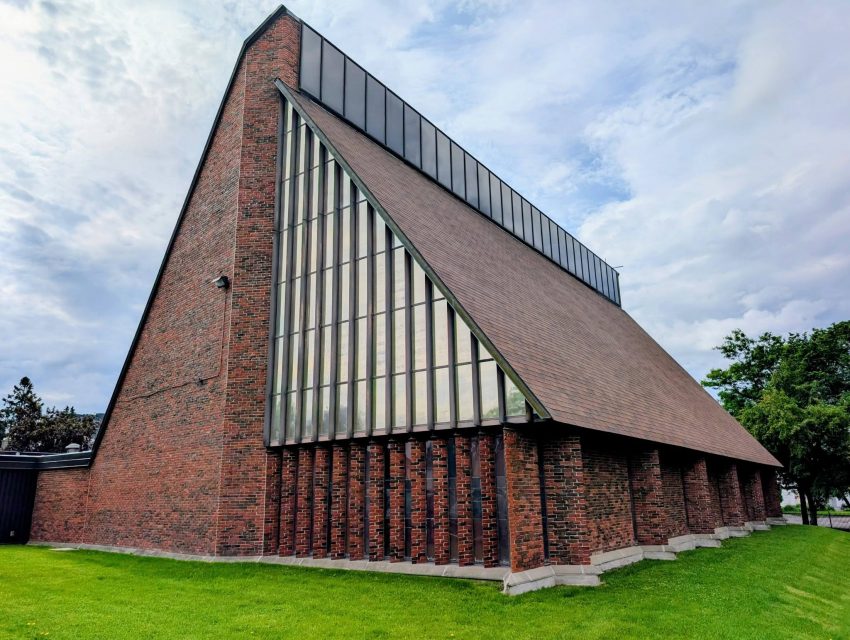
St. Aidan’s Anglican Church, in the Elmvale Acres neighbourhood, is a daring example of Mid-century modern church architecture. It is among the most striking A-frame modernist churches in Ottawa, with a steep roof-line and a triangular wall of glass that illuminates the interior. I attended their 9:30 AM Sunday liturgy on June 21, joining 60 parishioners for a service that marked the National Indigenous Day of Prayer. This day has formed part of the Anglican Church of Canada’s liturgical calendar since 1971 and it coincides with the Summer Solstice. As the Church explains, June 21 invites parishes to “honour Indigenous Peoples, celebrate the Creator’s gifts and recommit to the shared work of healing, right relationship and renewed life in Christ.”
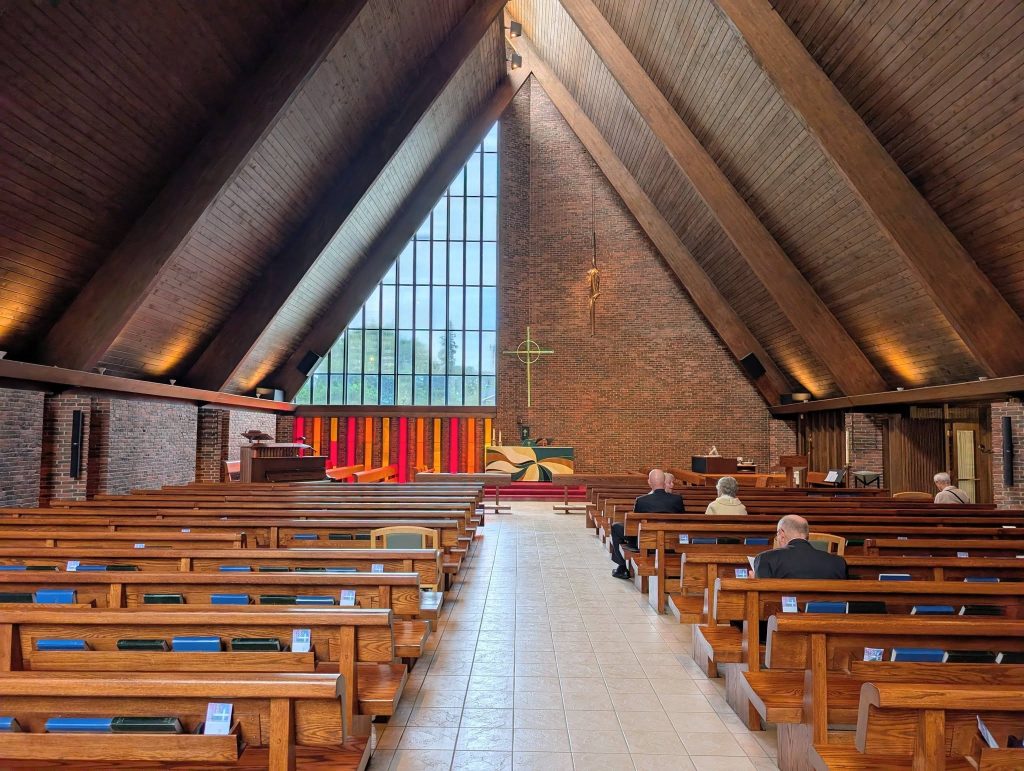
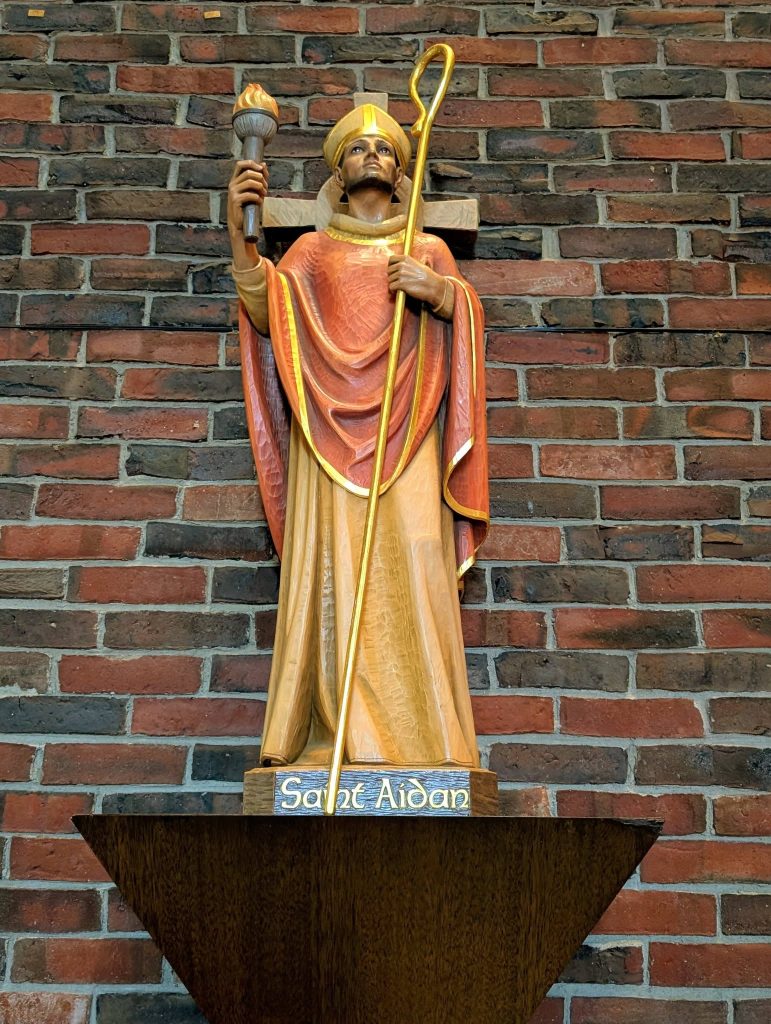
Named after the 7th century Irish monk and bishop St. Aidan of Lindisfarne — known for his humility and for giving away the food he received to the poor — the church was built in 1965. The congregation itself predates the building, constructed with entrances at 934 Hamlet Road and 955 Wingate Drive. The community was established on St. Aidan’s Day, August 31, 1958. It had as its first rector the Reverend Kenneth G. Rutter, a World War II veteran. Initially, local Anglicans worshiped at nearby Vincent Massey School. Bishop Ernest Reed laid the cornerstone in December 1964 and the church, designed to accommodate up to 440 people, opened its doors to the faithful in June 1965. At the time of its opening, St. Aidan’s included about 420 families. In those years, each Sunday St. Aidan’s celebrated Holy Communion at 8:00 AM, Matins at 9:15 AM, a Sung Eucharist at 11:15 AM and Evensong at 7:30 PM.
While the congregation today is smaller than it was in the years following its establishment, the life and rhythm of the church continued in 2025, with three marriages, two confirmations, one baptism, and seven burials. This past year, St. Aidan’s also offered an Alpha Course — an eight-week programme on the fundamentals of Christian life and faith.
On June 21, Reverend Rosemary Parker served as the Celebrant at the Liturgy of the Sacrament, while Dr. Anne Quick offered the reflection and presided at the Liturgy of the Word. Reverend Parker has served as Incumbent at St. Aidan’s since 2021.
“The Church of Christ in Every Age” from the Common Praise hymnal served as the processional hymn. The liturgy began with the congregation honouring the Four Directions, an immersive and communal prayer that combines Christian and Indigenous spiritual language and imagery, and ends by pointing to Christ. The Gospel reading, John 1, was proclaimed using the First Nations Translation. To English ears, this is a novel translation of an oft-cited verse: “Long ago, in the time before all days, before the creation of all things, the one who is known as the Word was there face to face with the Great Spirit. This Word fully represents Creator and shows us who he is and what he is like. He has always been there from the beginning, for the Word and Creator are one and the same.”
In her reflection, Dr. Quick spoke of the many names we have for the Creator, each of which says something of how generations of the faithful and different cultures view the attributes of God. Dr. Quick spoke of how in Indigenous cultures, as reflected in the First Nations Translation of John 1, God is presented as Creator and the Great Spirit, rather than described through language that implies, first and foremost, position and power. She also noted the principle of “words before all else,” present in Indigenous culture, within the context of giving thanks and being intentional in expressing gratitude.
Dr. Quick connected the importance of gratitude to the Second Reading, from Philippians 4, in which Paul writes: “Do not be anxious about anything, but in every situation, by prayer and petition, with thanksgiving, present your requests to God. And the peace of God, which transcends all understanding, will guard your hearts and your minds in Christ Jesus.” She added that offering thanks before doing or saying anything else is something we could incorporate in a greater way into the life of the Church and into our personal lives as well. Dr. Quick proceeded to give thanks for the care that Indigenous peoples have shown for the lands on which we live today, as well as for collaborative and consensus-based models of government, such as that which exists in Nunavut.
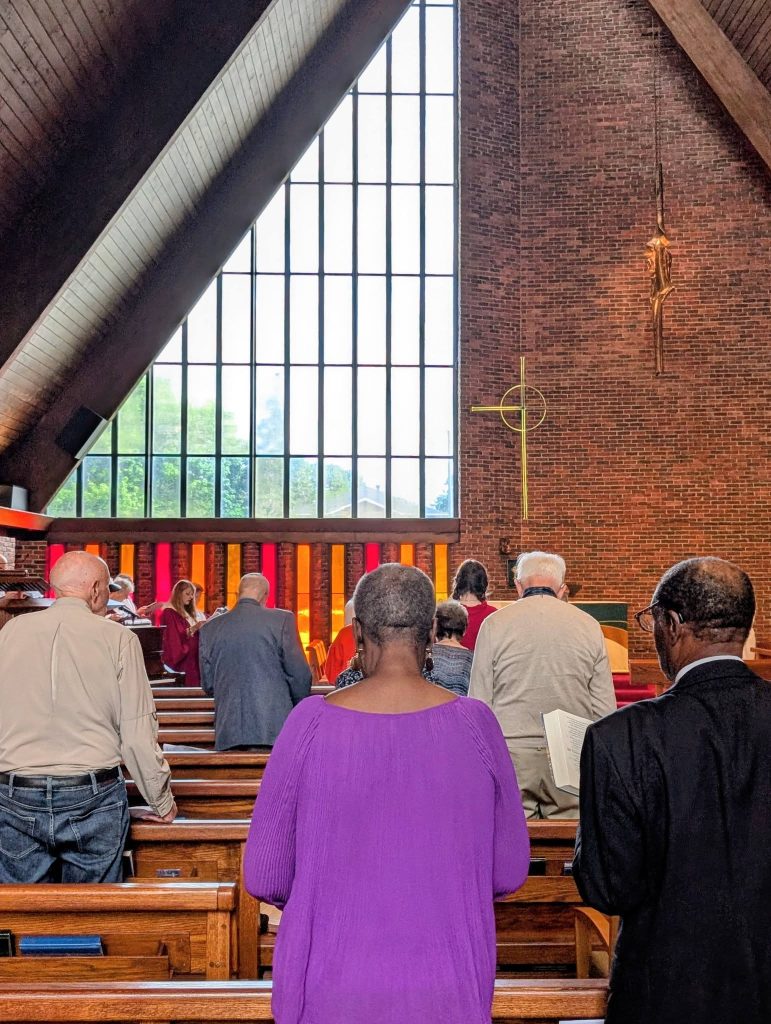
St. Aidan’s has an excellent choir directed by Tea Mamaladze for over 20 years. Choristers offered mostly traditional hymnody. Among the hymns sung at this service were “O Healing River” and “Let Streams of Living Justice Flow.” Both were from Common Praise and the latter is especially well-known across many denominations.
As the liturgy neared its conclusion, the words of the prayer after communion reflected the concepts of thanksgiving, trust, grace and mercy present at the heart of the service: “Send us anywhere you would have us go, only go there with us. Place upon us any burden you desire, only stand by us to sustain us. Break any tie that binds us, except the tie that binds us to you.”
Following the liturgy, all were invited to Lindisfarne Hall for coffee, tea and a selection of homemade baked goods. And just beyond the hall is an inviting courtyard garden, meticulously cared for by this faith community. It includes a labyrinth and benches — a nice spot for quiet reflection.
Christopher Adam
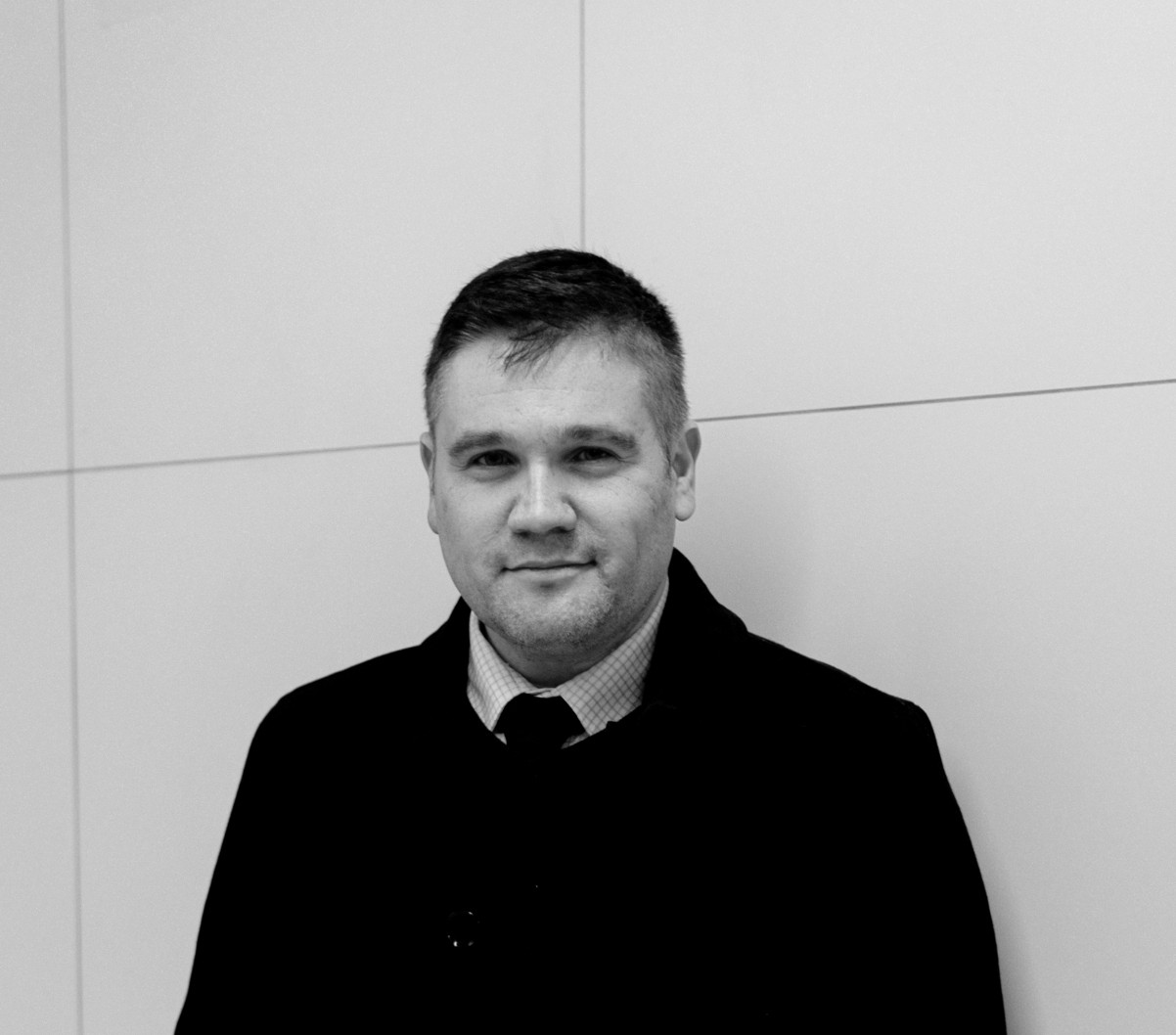
Born in Montreal, Christopher Adam has called Ottawa home for the past twenty years. He received his MA from Carleton University, with a thesis focusing on twentieth century European church history, and a PhD in History from the University of Ottawa. Over the years, he has published widely and works in the faith-based charitable sector in Ottawa.