
Located 1,100 kilometres southwest of Ottawa, St. Mary’s Church in Chillicothe, Ohio certainly lives up to this publication’s “Farther Afield” category. I had just spent two days visiting a friend in this town situated an hour south of Columbus when I decided to attend Mass at St. Mary’s, one of three Roman Catholic church sites that together comprise Our Lady, Queen of the Apostles Parish. The snow had started falling that afternoon and once the 5:00 pm Vigil Mass had begun on December 13, a mighty winter storm was in full swing. Thick clumps of wet snow clung to branches. Chillicothe resembled a veritable Christmas wonderland. I was here to attend the Mass for Gaudete (Joy) Sunday. In the Catholic liturgical tradition, Saturday evening (Vigil) Masses are effectively Sunday Masses.
The current church located at 61 South Paint Street dates back to 1866, but clergy visited Catholics in Chillicothe and offered the Sacraments as early as 1817. In the nineteenth century, Chillicothe’s Catholic population was composed largely of Irish and German immigrants. Two churches, St. Peter’s and St. Mary’s, served these two immigrant communities. Chillicothe was considered to be a mission field. On April 22, 1886, The Catholic Telegraph, reflecting the language of the times, had the following to say about the early work of Chillicothe’s pioneering missionary priest, a man of youthful zeal, Fr. Henry Juncker:
Ankle deep in mud, and while the bitter, biting winds whistled among the lonely hills, the pious man continued his weary journey until he found partial relief at some humble log cabin by the wayside, surrounded, no doubt, with all the privations attending poverty and neglect; and to add to those vexatious trials, the first pastor of Chillicothe was often subjected to the bitterest persecutions and maltreatment at the hands of apostates and different Christians…About 1843, Father Juncker departed for Europe, to look for assistance in his missions, and during his absence the ministration was conducted by Rev. Father Amodeus Rappe, afterwards Bishop of Cleveland. On his return from Europe, Father Juncker found that his congregation had grown to such large proportions that he immediately set about to secure a church large enough for its accommodation.
The church that I entered on that Saturday night was quite a different community from what it would have been near the end of the nineteenth century. For one, gone are the linguistic differences — the use of the German language faded away after World War I. And given the demographic changes in religious affiliation in this part of the United States, 2024 saw the consolidation of three churches — St. Mary’s and St. Peter’s in Chillicothe and St. Mary’s in nearby Waverly — to form a single pastoral unit: Our Lady, Queen of the Apostles Parish.
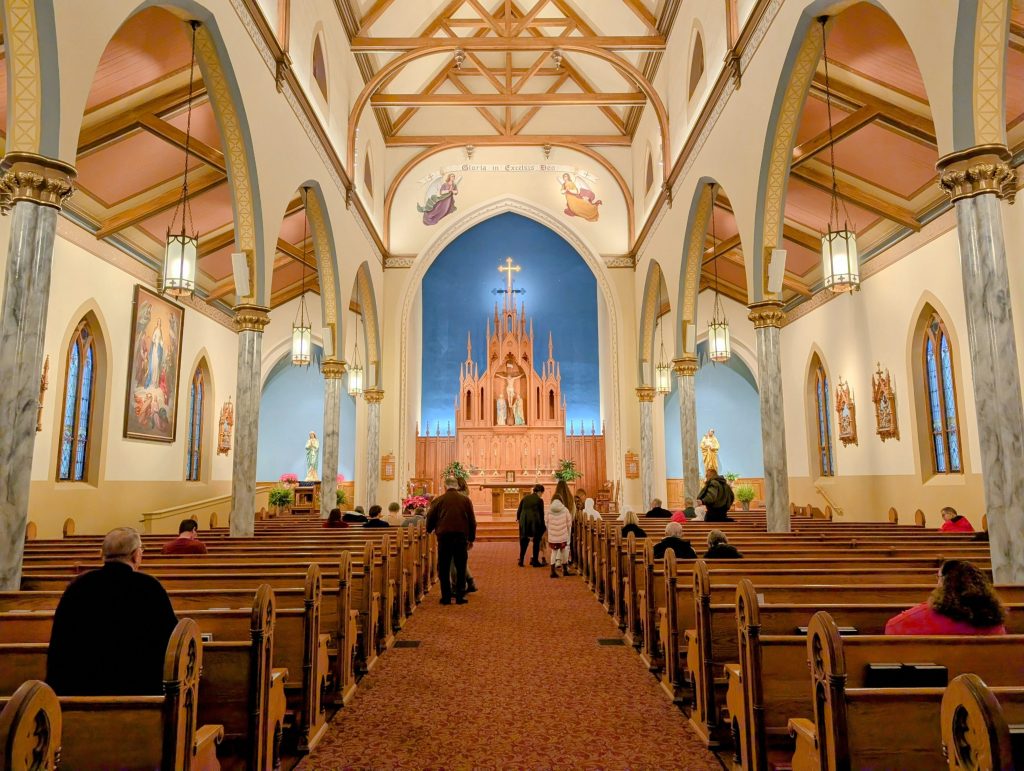
The liturgy for Gaudete Sunday was a spoken or Low Mass, without music. It was a simple liturgy. The presider, Monsignor Frank Lane, processed down the main aisle in silence, along with a concelebrant and an altar server. The congregation in the pews numbered around 55. Rose-coloured vestments signalled Joy Sunday, the third Sunday of Advent.
In his homily, exploring Matthew 11, Msgr. Lane speaks of how the imprisoned John the Baptist had heard of Jesus’ miracles and sent his disciples to ask Christ whether he was, indeed, the Messiah or if they ought to continue waiting. Doubt had crept into John the Baptist’s thoughts. Jesus points to a series of miracles, foretold by the Prophet Isaiah, that he had done — curing the blind, deaf and lame, washing the leper clean. But Jesus did not wear fine robes, he did not live in a royal palace, he had none of the things that people at the time recognized as the trappings of earthly power. He didn’t look like the Messiah that most people expected to see.
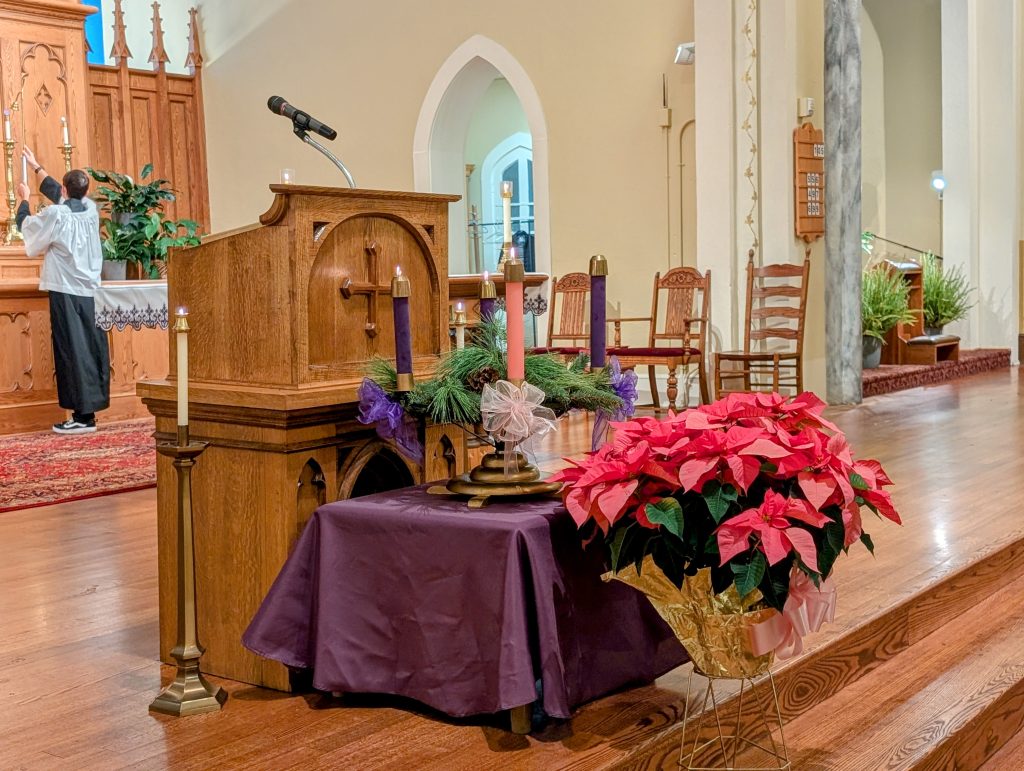
Msgr. Lane turned to the contemporary realities of the Church. What do people come to see when they attend Mass? What do they expect? He shared:
“Unfortunately, many people in our society say: ‘I come to the Church for this reason or for that reason, or because in some places it identifies itself with some kind of contemporary ideology that I like.’ But Jesus continues to ask the question: what did you come to see? Did you come to see God? Did you come to encounter Jesus? Many have scattered, many are no longer with us, because the Church didn’t buy into the ideologies that they had. And so they walked away. What had they come to see? Whatever it was, they were disappointed.
John the Baptist understood. What did you come to see? The Prophet. What did you come to see fulfilled? The prophecies. Who fulfills the prophecies? The Messiah. Whatever our disappointments might be — and John was disappointed — the foundation of our presence is there. It is the Lord Jesus Christ coming to us, to enter into us, to remain with us, and to be a part of our lives. If that’s why we come to church, then we have heard the voice of the prophets. The voice of the prophets of old has been transferred into the Church. And we have heard the Church teach that you join yourself to God when you come to Mass. As we anticipate His birth, His manifestation to the peoples of Israel, we are being reminded of why He came, how He is among us, what our relationship to Him really is. All of those questions come to us and all of those questions are answered in the person of Jesus.”
Reading the Parish Bulletin after Mass, I could see the faithful’s involvement on the margins of Chillicothe. St. Mary’s distributes 100 bagged lunches to the homeless and the hungry each week. The Knights of Columbus and their friends also serve 120 food-insecure families in Ross County each month, and run a local food pantry. Their faith in the Christ who walks on the margins and heals the downtrodden leads them to serve those most in need, too.
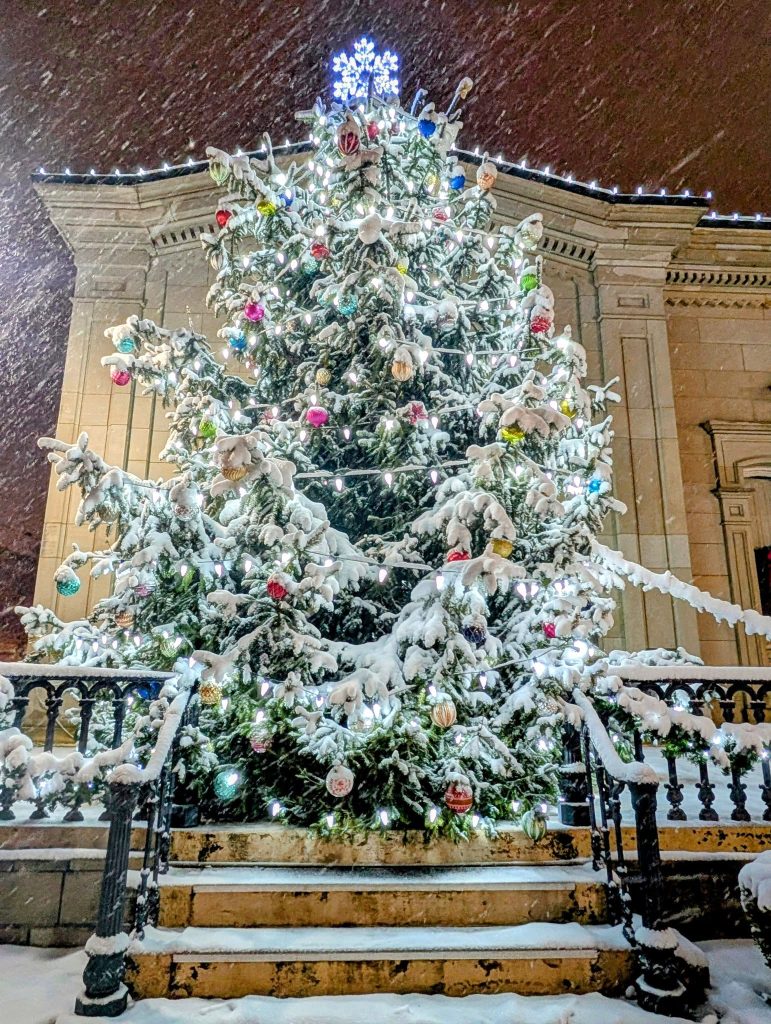
After Mass, I walked through Chillicothe’s beautifully illuminated and very snowy historic downtown. The weather may have been treacherous to most, but it wasn’t too disconcerting to this Canadian. The quiet that falls over towns after fresh snowfall carries a certain peace and joy.
Christopher Adam
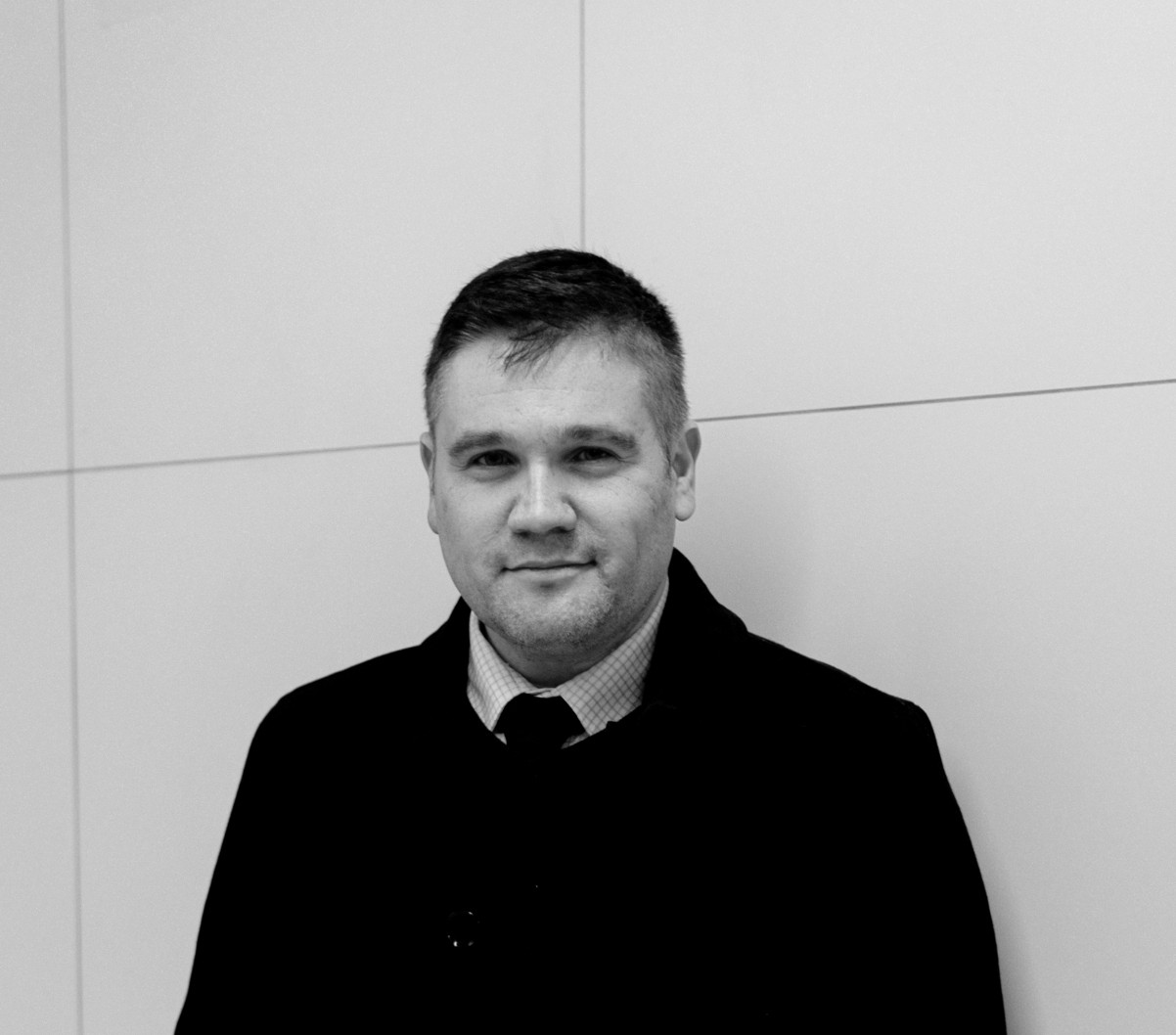
Born in Montreal, Christopher Adam has called Ottawa home for the past twenty years. He received his MA from Carleton University, with a thesis focusing on twentieth century European church history, and a PhD in History from the University of Ottawa. Over the years, he has published widely and works in the faith-based charitable sector in Ottawa.