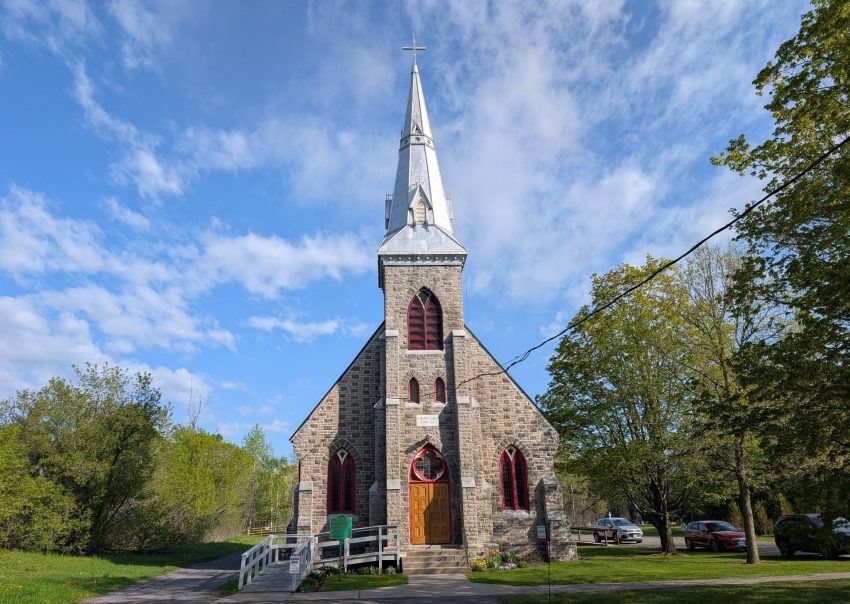
On May 17, Ontario’s black flies had well and truly awakened from their slumber in Spencerville — a village 80 kilometres southwest of Ottawa and home to the historic St. Laurence O’Toole Church. They encircled me as I exited my car and made my way into this small, but vibrant country church built in 1884. I was greeted by a volunteer before parishioners gathered to say the rosary ahead of Sunday 9:00 AM Mass. Soon enough, the pews filled with close to 100 parishioners of all ages, including many children and young families.
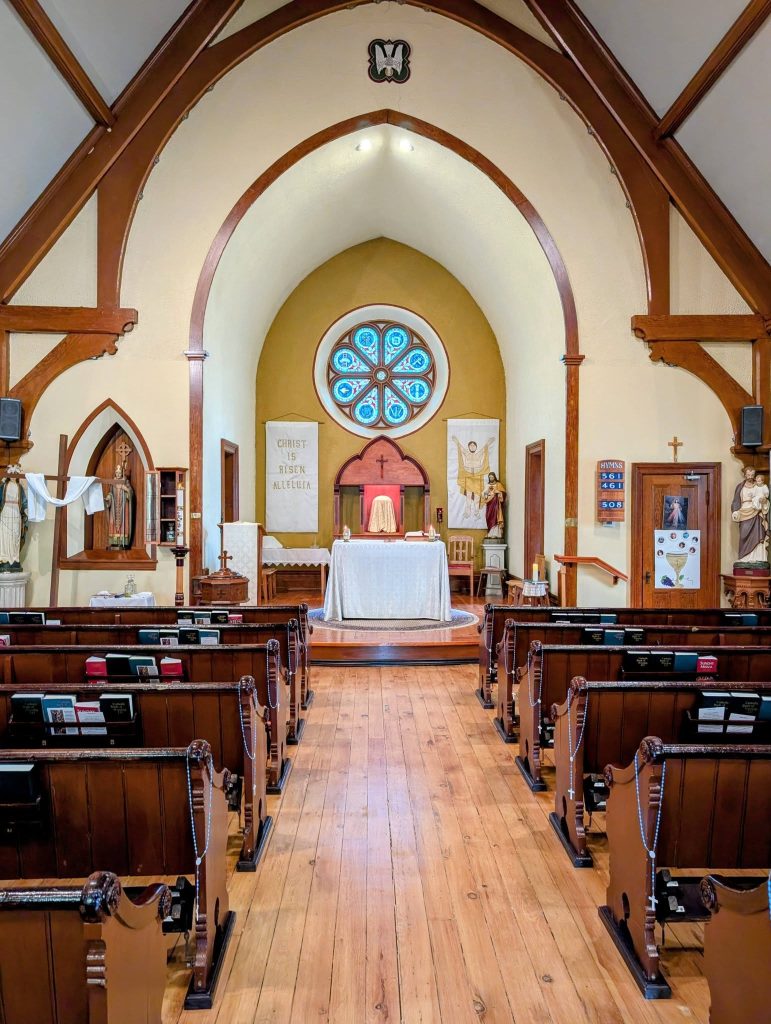
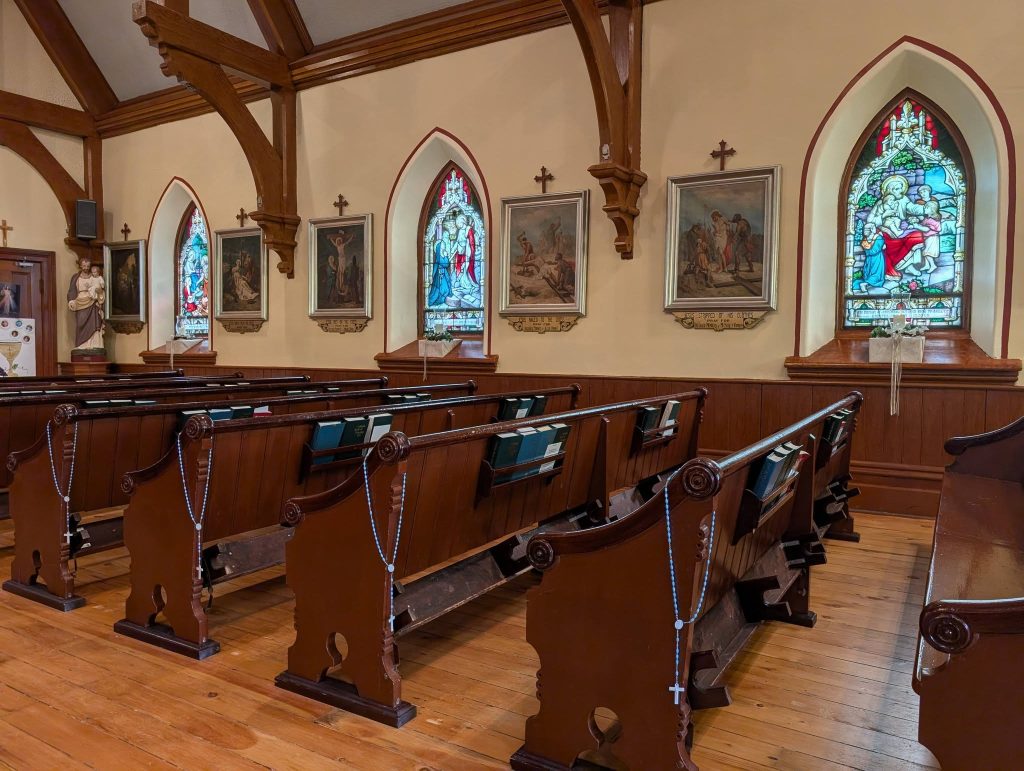
While Spencerville is a brief, 45-minute drive from Ottawa, its local Catholic church is part of the Archdiocese of Kingston. With its cornerstone laid in 1883, the church in the late nineteenth century served mostly Irish Catholics. In a pre-automobile world and before the completion of this church, they traveled long distances to Kemptville or Prescott for the Sacraments. Initially, the Pastor of St. Mark Parish in Prescott, Fr. John Masterson, supervised the construction of the new church while the Bishop of Kingston, James Vincent Cleary, laid the cornerstone. The church bears the name of the 12th century Archbishop of Dublin, also known as Lorcán Ua Tuathail in Irish Gaelic. By 1888, the new church had become a parish, including 15 acres of property and a cemetery. A historical plaque next to the front entrance captures some of the history and is the work of the Canadian Catholic Historical Association and the Archdiocese of Kingston. Today, the church forms a pastoral unit with St. Ann in Merrickville, sharing a priest and deacon.
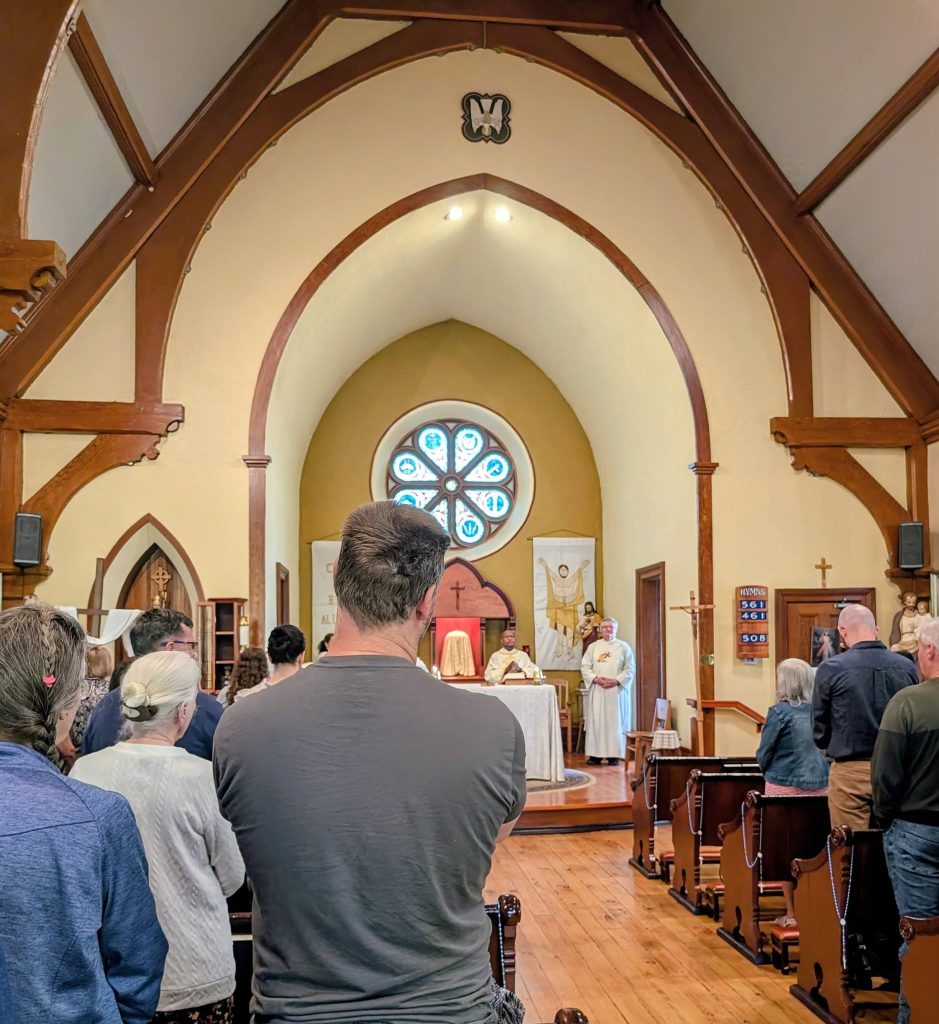
Fr. Paul Mawalla serves as the Administrator of St. Laurence O’Toole and St. Ann churches, with Deacon Mark Mawson assisting in pastoral ministry. On May 17, Ascension Sunday, Deacon Mark offered the homily and celebrated the Sacrament of Baptism for the newest and youngest member of the parish family. The Deacon played a central role throughout the Liturgy of the Word, while Fr. Paul presided over the Liturgy of the Eucharist. Deacon Mark was warm and gregarious throughout the liturgy and in his interactions with parishioners.
In his homily, Deacon Mark recognized that the Feast of the Ascension could be difficult to understand. Yet we can each draw something different and unique from the Ascension and we can ask ourselves: what does the Ascension mean to me? Deacon Mark encouraged the congregation to reflect on what the disciples might have felt. They had just spent three years with Jesus. “Imagine what it would have taken for them to walk away from the safety and security of their homes to follow him,” he asked. “Is there anyone in your life that you would have dropped everything for? What would it be like, if that person died? Quite a few of us have experienced that crushing pain; you feel abandoned and alone, like the disciples did when Jesus died on the cross.”
Deacon Mark compared the experience of following Jesus, his brutal death, his resurrection, and then his Ascension as an emotional roller-coaster ride for his followers. “They were left there staring at the sky. They had so much to process,” he said. “Each of us has been there. We’ve all faced this kind of roller-coaster ride in our lives. We experience the ups and downs, and we never known when the next change is around the corner. It’s like being on a roller-coaster blind-folded,” Deacon Mark added. We probably all know someone who is battling a life-threatening disease, or dealing with depression. The roller-coaster of remission, only to see the disease progress, is exhausting.
In Scripture, people of faith climb mountains to meet God. Moses, Abraham, and Elijah were all on mountains when God appeared to them. Jesus had asked his disciples to meet them on a mountain, because he wanted to remind them that they will always be in God’s presence. Even if they were about to experience the physical loss of the Ascension, God is still fully there among them. “Roller-coasters are not comfortable places to be and it’s easy to lose track of God’s presence in our lives. And yet God has never left us. God has never stopped listening to us. God is right here, at our side,” Deacon Mark shared. “God is there when we share our faith with others and when we recognize the dignity of the other.”
“Faith is not a set of rules,” Deacon Mark said. “Faith is a way of life and it’s a way of being. No matter how much we doubt or where we are on the roller-coaster, Jesus promises us that he will always be with us, until the end of time. And that is the promise of the Ascension.”
The church choir sang from the loft, accompanied by a pianist, and led the congregation in mostly traditional hymnody. The hymns included “O God Beyond All Praising,” “Holy Mary, Full of Grace,” and “Go to the World!”
As Mass concluded, volunteers set up a table with coffee, juice, and sweet treats on the church’s front lawn. “Come and get some refreshments before the black flies do,” a smiling parishioner exclaimed, as the faithful stepped out into the sun.
Christopher Adam
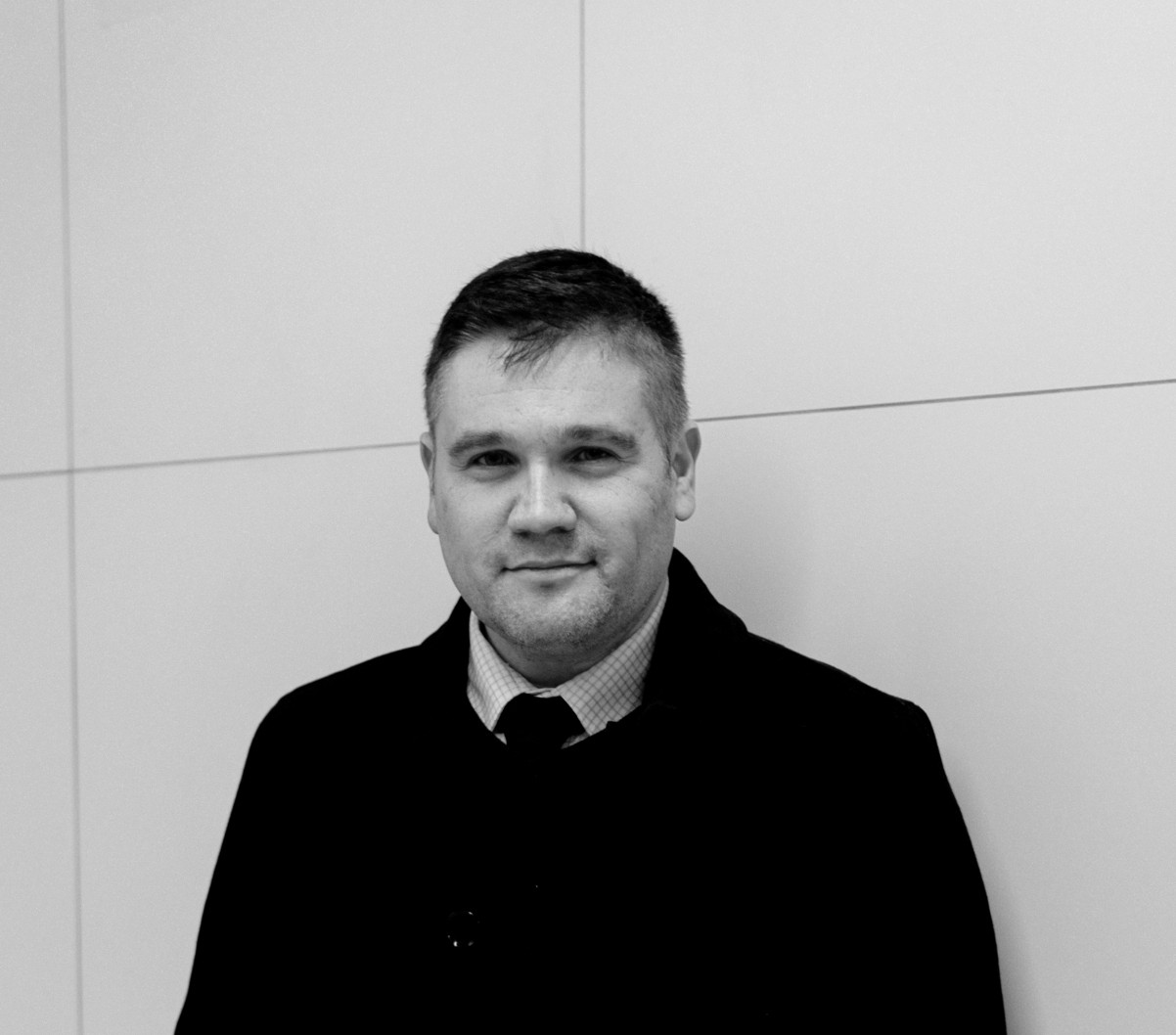
Born in Montreal, Christopher Adam has called Ottawa home for the past twenty years. He received his MA from Carleton University, with a thesis focusing on twentieth century European church history, and a PhD in History from the University of Ottawa. Over the years, he has published widely and works in the faith-based charitable sector in Ottawa.